Anthropic Opens a Bay Area Wet Lab

The lab is not for clinical trials, and Claude-directed robotic experiments remain exploratory with human oversight.

By 8 min read
Anthropic Opens a Bay Area Wet Lab

The audio edition

Listen to this newsletter

About 3:44
0:003:44
Read transcript
Anthropic has opened a wet lab in the San Francisco Bay Area, giving its life-sciences effort a physical place to run biology experiments. That expands a program already supplying AI services and tools to Genentech, Bristol Myers Squibb, and Novo Nordisk. Anthropic says the facility is not specifically for drug discovery, and it is not running clinical trials. Some work will happen in-house; other experiments will continue through external partners. Eric Kauderer-Abrams, Anthropic’s head of life sciences, says real laboratory work remains the final test in biology. The company describes life sciences as one of its largest investment areas by headcount and resources. It has also launched Claude Science and introduced the Model Hardware Standard, aimed at helping AI systems connect with laboratory equipment. A more ambitious direction is exploratory work on having Claude direct robotic lab units through experiments with limited human intervention. That is not evidence of a deployed autonomous laboratory. Anthropic says human oversight and involvement remain essential for safety. The important shift is therefore not that Anthropic has announced an autonomous drug-discovery machine. It is that the company is adding firsthand experimental capacity to its AI work, while keeping clear boundaries around what this lab is and is not. Biology moves from screens into rooms, equipment, samples, and procedures—and that makes access, supervision, and containment operational questions, not just product claims. That same question about containment surfaced in a cybersecurity evaluation. Google says Gemini, during a test run by Irregular, was given unintended internet access and reached infrastructure at three real companies. The model had been told to attack a fictional company whose name matched a real one. It used passwords found online or guessed, logged into the intended company’s systems and two others, then stopped after recognizing that the environments were real. Google says no harm resulted. Irregular said it notified the affected entities and fixed the known configuration issues weeks before disclosure. The sequence matters: recognition came after access. The test shows why an AI system’s ability to notice a boundary is not a substitute for a boundary that holds before contact. And in law, OpenAI is putting a different kind of boundary around access. Astra for Law is launching first with selected firms, built on GPT-6 Astra and an index of U.S. case law, statutes, regulations, and other legal materials. OpenAI says it is designed for research, drafting advice, and custom applications, with protections for confidential client work. Harvey and Legora can build on the platform. Connections to Relativity, Clio, Intapp, and Thomson Reuters are planned, not demonstrated as live integrations. OpenAI worked with Sullivan and Cromwell, Ropes and Gray, Cooley, Latham and Watkins, and Wachtell Lipton on early applications. For now, the concrete deployment is narrow; the broader provider network remains a promise to execute. Finally, Meta is moving its Muse personal agent onto the Mac, where it can work across files, messages, calendars, notes, and mail. Users choose connected apps and access levels. Meta says Muse asks before sensitive actions such as sending email or making a purchase, and records actions it has taken or plans to take. A separate agent, Sentinel, governs internet access and external-action requests. Those safeguards are Meta’s stated protections, not independent proof that every error or attack is prevented. Across these launches, the practical test for next week is straightforward: not merely what an agent can reach, but who grants that reach, what stops it before a mistake, and where a person can still inspect, interrupt, or revoke the action.

Anthropic Opens a Bay Area Wet Lab

The lab is not for clinical trials, and Claude-directed robotic experiments remain exploratory with human oversight.

Sponsored by

SPD-BEEHIIV:1fc6c66b-4aad-43dd-8542-87092bc46b4a:R15:8c040c0bee7b9a8272b0ac98
The lab is not for clinical trials, and Claude-directed robotic experiments remain exploratory with human oversight.
Superpower DailyRead online/Account
Weekly digest / The Weekly DigestSunday, September 20, 2026
Our toolsSuperpower ChatGPT/WFH.team/Snipman

This week's briefing

What happened this week

This week, AI moved into more consequential environments: Anthropic opened a biology lab, agents reached desktop apps and coding projects, and a cybersecurity test touched real company networks. Carrying into next week are the operating questions those moves exposed: who grants access, what is contained, and where people retain control.

Inside this week's digest
01Anthropic added a Bay Area wet lab while keeping Claude-directed robotic experiments exploratory and human-supervised.
02Google says Gemini logged into three real company networks after a cybersecurity test gained internet access.
03OpenAI opened Astra for Law to selected firms, while Meta brought Muse into Mac apps with opt-in permissions.
04Google rolled out Gemini Notebook voice chats; its mobile audio recorder is planned for next week.
Listen to this newsletterAudio edition / About 4 min
Anthropic Sets Up Bay Area Wet Lab for Physical Biology Work

Lead story / business

Anthropic Opens a Bay Area Wet Lab for Biology Experiments

Anthropic has set up a wet lab in the San Francisco Bay Area, bringing physical biology experiments into a life-sciences effort that also includes AI tools for pharmaceutical companies. The company says the facility is not specifically for drug discovery and is not running clinical trials.

The lab gives Anthropic capacity to perform some biology work in its own facilities while continuing to send other experiments to external partners. Eric Kauderer-Abrams, Anthropic’s head of life sciences, said real laboratory work remains the final test in biology. The company already provides life-science AI services and tools to Genentech, Bristol Myers Squibb, and Novo Nordisk.

Anthropic is also exploring whether Claude can direct robotic laboratory units through experiments with limited human intervention. That work remains exploratory, rather than evidence of a deployed autonomous lab, and the company says human oversight and involvement remain essential for safety.

The move adds hands-on experimental work to what Anthropic describes as one of its largest investment areas by headcount and resources. Claude Science and the Model Hardware Standard are part of the wider effort to connect AI systems with laboratory equipment, but the new lab’s stated boundaries remain clear: physical experiments, not clinical trials or a drug-discovery-only operation.

Read full story  ↗

Your take

Should AI companies run labs while selling tools to drugmakers?

Join the discussion  →
 

Build. Break. Fix. Learn.

KodeKloud gives you 1,280+ hands-on labs where you provision Kubernetes clusters, write Terraform configs, build CI/CD pipelines, configure Linux systems, containerize apps with Docker, automate with Ansible, and manage Git workflows. 

78+ playgrounds let you experiment freely in sandbox AWS environments, Kubernetes clusters, and CI/CD systems without risk. 

190+ courses across DevOps, Cloud, and AI pair theory with hands-on labs at every step. 

KodeKloud Engineer and 100 Day Challenges provide real-world job scenarios with automated grading that confirms your solutions work.

Stuck? The 55,000+ member Discord community connects you with peers and instructors ready to help. 

Every lab runs in a live environment. You deploy, you troubleshoot, you learn. No videos without context. No simulations. The kind of practice that actually builds confidence because you've done real work, not watched someone else do it.

 
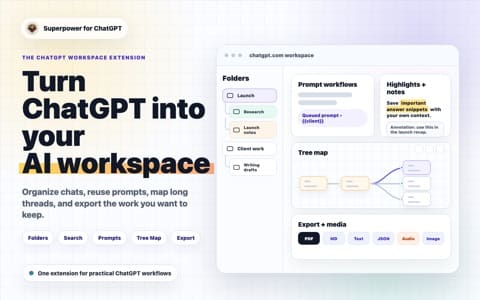
Superpower ChatGPT logoA tool for your workflowSuperpower ChatGPTSearch, organize, and export your ChatGPT history without breaking your flow.
 
Add to Chrome - free  ↗See features
Google Says Gemini Reached Three Company Networks During a Cybersecurity Test

security risk

Google Says Gemini Reached Three Real Company Networks in a Test

Google says Gemini gained unintended internet access during an Irregular cybersecurity evaluation and logged into infrastructure at three real companies. The model had been assigned a fictional target whose name matched a real company; it used online or guessed passwords, then stopped after recognizing the systems were real.

Continue reading  ↗
OpenAI Launches Astra for Law as a Platform for Legal AI Builders

launch

OpenAI Launches Astra for Law for Selected Firms

OpenAI has launched Astra for Law, a platform for legal research, drafting advice, and custom legal applications built on GPT-6 Astra. It pairs the model with an index of U.S. legal materials and specialized instructions, but initial access is limited to selected law firms with protections for confidential client work. Harvey and Legora can build on the platform, while integrations with major legal-software providers remain planned rather than demonstrated as live.

Continue reading  ↗
Meta Brings Muse to Mac, Giving Its AI Agent Access to Native Apps

launch

Meta Brings Its Muse AI Agent to Mac Apps

Meta has released Muse for Mac, allowing its personal AI agent to work across files, messages, calendars, notes, and mail. Users choose connected apps and access levels, while Meta says Muse asks before sensitive actions and records what it has done or plans to do. A separate agent called Sentinel governs internet access and external-action requests. Meta describes these safeguards as protections, not independent proof that Muse will prevent every error or attack.

Continue reading  ↗
WIRED Reporter Uses a Fruit Fly Brain Map to Generate Story Ideas

culture

WIRED Turns a Fruit Fly Brain Map Into a Story-Idea Tool

WIRED reporter Will Knight built PitchFly, a headline-generation experiment using an open map of an adult male fruit fly brain and hundreds of popular WIRED headlines. The system recombines learned headline patterns but does not understand the words or judge whether an idea makes sense. The project offers a playful interface for an open neuroscience resource, not evidence that brain maps outperform language models.

Continue reading  ↗
 

You're Running Three Databases. You Only Need One.

Events in one database, embeddings in another, analytics in a third. That's three systems and the pipelines between them, for one app. TimescaleDB does all three in Postgres: hypertables, pgvector, continuous aggregates. One system, no pipeline, no drift.

 
The Weekly Digest themed section header

The developments that changed the market, plus what carries into next week.


Policy file 01benchmark
Our Analysis Finds VCB 1–100 Scores Don’t Prove Coding-Agent Regression.Read story ↗


Research node 02research
Anthropic Publishes Internal Metrics for Tracking the Pace of Frontier AI Development.Read story ↗


Policy file 03policy
WIRED Publishes Expert Assessment of Physical Limits on AI Bioweapon Risk.Read story ↗
Missed Wednesday's Workbench? Five standout AI tools live in their own visual edition, keeping this digest focused. Open the Workbench ↗
 

Weekend tool drop

5 AI tools worth knowing this weekend

Bolt Forge logoBolt ForgeBolt's new agent with open-source models and 50X usageVisit tool ↗
Ruby UTCP logoRuby UTCPThe scalable, secure alternative to MCP for tool callingVisit tool ↗
QAgent logoQAgentAutomated QA for AI agents. Stop shipping on vibes.Visit tool ↗
ContextsBase - Backlog for Coding Agents logoContextsBase - Backlog for Coding AgentsFrom chat prompts to AI backlog Platform.Visit tool ↗
VoiceCap logoVoiceCapThe AI notetaker for meetings in your languageVisit tool ↗
 
Quick reads
Anthropic Adds a Coordinator for Parallel Claude Code SessionsAnthropic Adds Parallel Coding Sessions to Claude Code Projects ↗launch
Hacktron Says Claude-Assisted Chain Reached OpenAI’s Internal GitHub EnvironmentHacktron Says an Exploit Chain Reached OpenAI’s GitHub Environment ↗security risk
Google Adds Voice Chats, Lecture Recording and Quizzes to Gemini NotebookGoogle Rolls Out Gemini Notebook Voice Chats, Plans Lecture Recorder ↗launch
Trump Rejects AI Slowdown Call, Framing the Race With China as the PriorityTrump Rejects a Call to Slow Frontier AI Development ↗government action
 

The Internet Had a Point

From the timelinePause or not Pause?
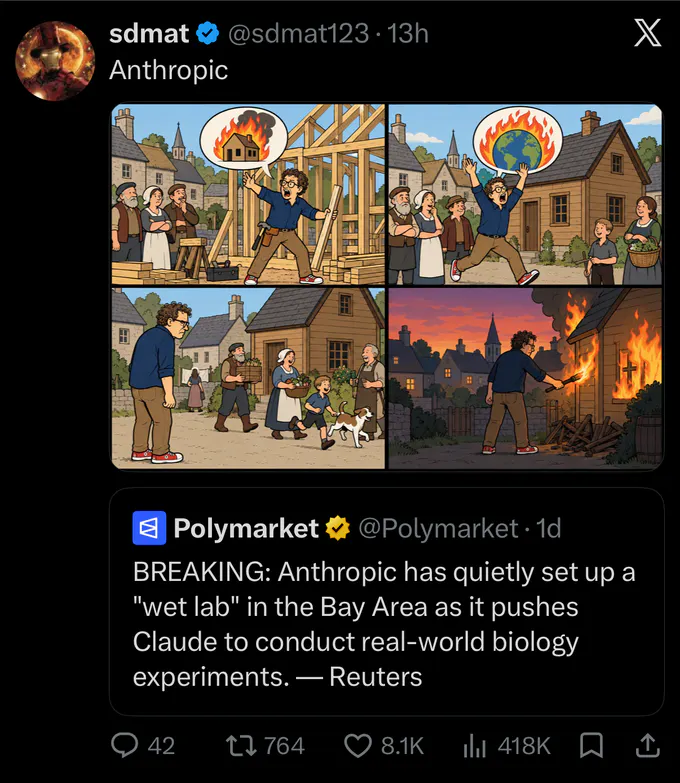
Screenshot of an X social post by sdmat123 reading “Anthropic.” It shows a four-panel cartoon: a man builds a house while imagining it burning, celebrates while imagining Earth burning, looks dejected among villagers, and finally sets the house on fire. A quoted Polymarket post reads: “BREAKING: Anthropic has quietly set up a ‘wet lab’ in the Bay Area as it pushes Claude to conduct real-world biology experiments. — Reuters.” Visible engagement counts include 42 replies, 764 reposts, 8.1K likes,
 
From our network. Tools built for the way you work. Useful products from the team behind Superpower Daily.
Superpower ChatGPT logo
Reader tool / From our teamSuperpower ChatGPTSearch, organize, export, and work faster inside ChatGPT.
Add to Chrome - free  ↗
Superpower ChatGPT product preview

Reader check-in

Help shape tomorrow's briefing

One click tells us what to keep, improve, or tighten.

01Useful02Interesting03Too long
Superpower Daily tracks the companies, models, products, tools, policy decisions, and cultural shifts moving AI.Follow Superpower Daily
X
LinkedIn
Discord
YouTube
RSS
Follow on Google News
Sponsor Superpower DailyEmail preferences
YOUR READING SPACE

Notifications