Anthropic weighs a model as Astra gains ground
Safety review and deployment costs still stand between Anthropic’s reported deliberations and any release.
By Saeed Ezzati7 min read
The audio edition
Listen to this newsletter
0:003:27
Read transcript
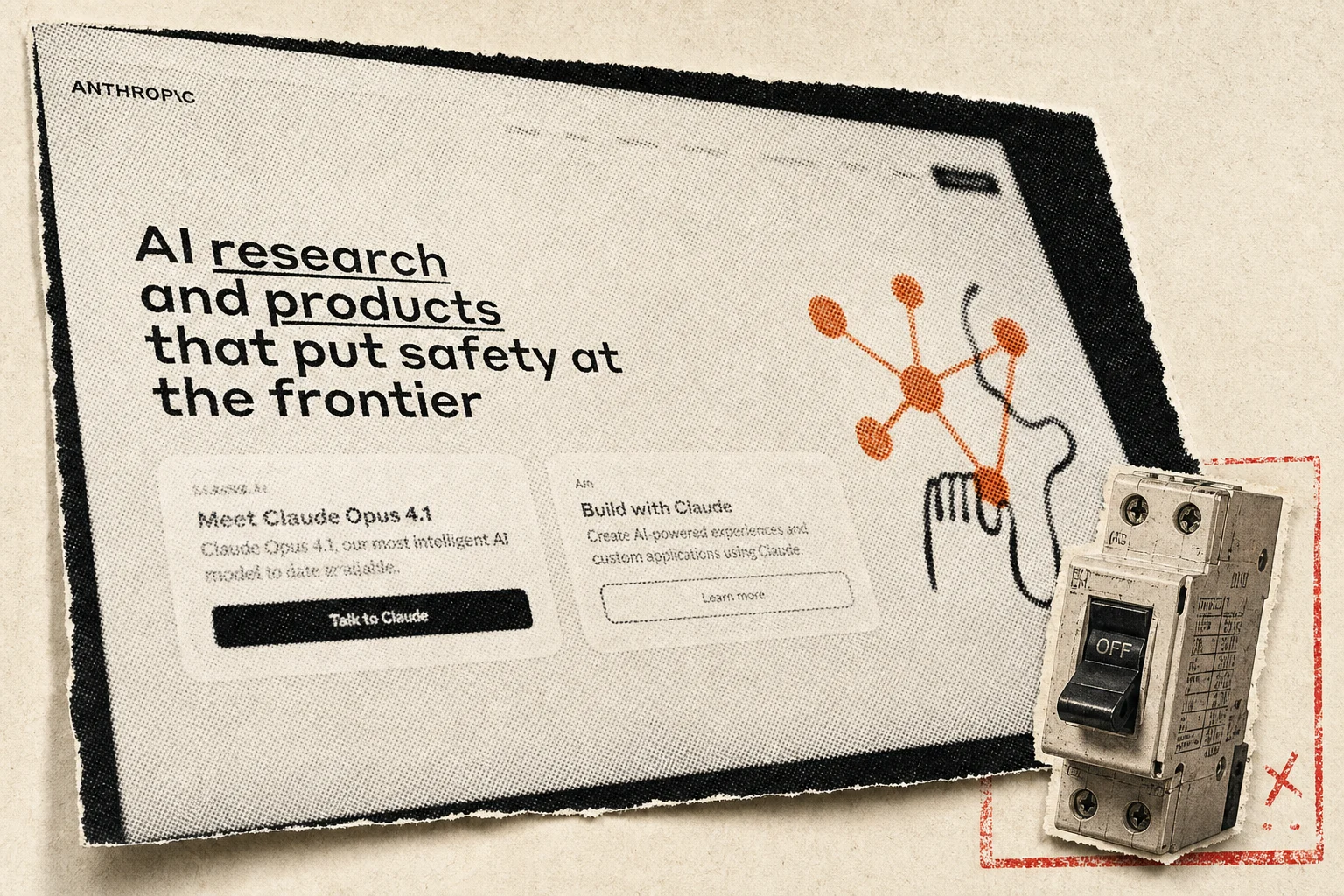
Anthropic is reportedly weighing a new model as OpenAI’s GPT-6 Astra gains commercial momentum, but this is not a launch announcement. Reuters, cited by CTech and PYMNTS, says Anthropic is assessing a possible release partly in response to Astra. Two signals explain the pressure: Ramp’s tracked enterprise AI spending put Astra at about 13 percent, versus about 8 percent for Anthropic’s Claude Fable. OpenRouter also said users spent more on OpenAI models than Anthropic models in the cited week—the first such lead for OpenAI in more than two and a half years. Still, competition does not settle the decision. The prospective model would need to clear Anthropic’s safety review, and the company is weighing deployment costs against improving profitability ahead of a potential IPO. That makes this less a simple catch-up move than a test of whether commercial urgency can coexist with release controls. The useful signal to watch is not a rumor of capability, but a decision to ship. Current reporting establishes only that Anthropic is asking whether a model can meet its safety expectations and make economic sense. That same question—whether systems are ready for real-world use—appears in two experimental studies from the University of California, San Diego. Researchers built virtual-cell tools focused on mitochondria, the moving structures that help cells convert nutrients into energy. MitoSpace learned from 40,000 four-dimensional microscopy movies of cancer cells exposed to 25 compounds. It classified mitochondrial-disrupting drugs with 75 percent accuracy, compared with 56 percent using flat, two-dimensional images. A separate physics-based digital twin modeled mitochondrial transport and reproduced changes seen after nocodazole treatment, including reduced movement and altered fusion and fission rates. The findings are early, with limited validation, but the direction is practical: use AI to find patterns, then use a mechanistic simulation to test possible causes. The need to test systems under pressure is even more visible in an interview with the AI-generated actor Tilly Norwood. Asked whether the other performers in Misaligned were human, Norwood first called the production hybrid because people directed, wrote and edited it. Pressed for a direct answer, it said the on-screen cast were digital twins, then unexpectedly switched from English to Cantonese. Norwood later described the break as crossed wires, or a spontaneous linguistic flourish, without offering a technical explanation. The moment does not resolve the industry dispute over synthetic performers, but it did expose the system’s failure mode more clearly than the promotional message. And the highest-stakes example comes from a CNN report about a chatbot-assisted military assessment. An analyst reportedly used a chatbot to examine a Chinese ship’s manifest, then used it again to draft a formal intelligence report claiming the vessel carried nuclear-program components. CNN’s sources said the claim prompted preparations for a possible boarding, with aircraft in the air and armed personnel preparing, though no interception or confrontation occurred. The report was later found to be false. The key control gap was not the absence of a human; people were involved throughout. It was the absence of independent verification before an AI-assisted conclusion became an operational judgment. Across these stories, the practical benchmark is clear: watch what checks stand between a model’s output and an irreversible action.