Block says its new voice AI learned without text
Early access is limited to safety researchers, while Block says Dessa can run locally on a high-end Mac.
By Saeed Ezzati8 min read
The audio edition
Listen to this newsletter
0:004:07
Read transcript
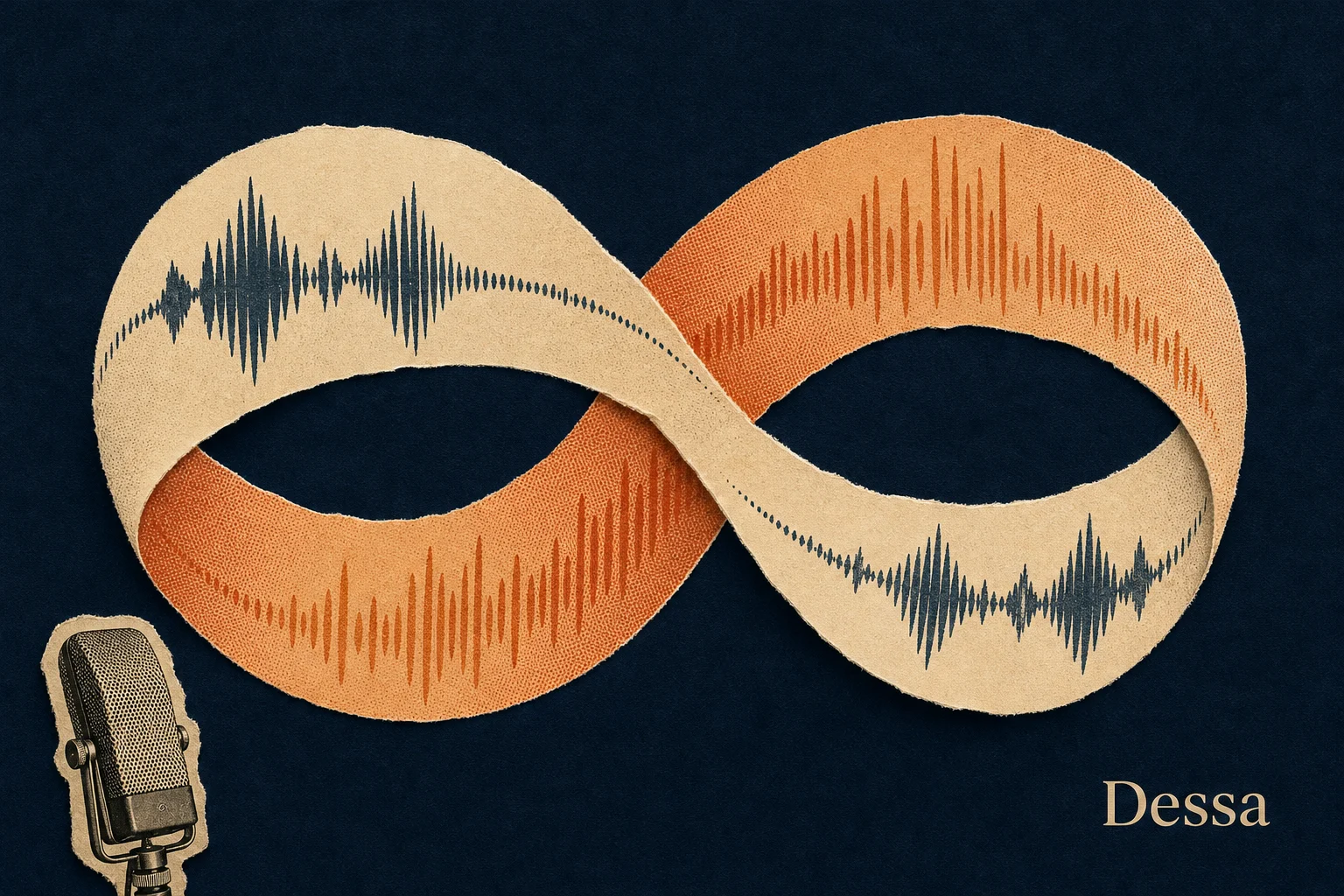
Block’s new voice AI, Dessa, is built around a different idea of learning: the company says it trained the model on human conversation audio alone, without text or pretrained models. It takes in audio and responds in audio, and it can listen and speak at the same time. Block says that lets it preserve cues like laughter, frustration, interruptions and timing that can get lost when speech is converted to text. The public evidence so far is a set of Block-produced recordings, not independent evaluations. In them, Dessa laughs mid-sentence, gets louder when asked to speak up, and gasps during a conversation about an anniversary surprise. Those clips show expressive conversational behavior. They don’t establish how well the model learns facts, or how efficiently it learns language. Block says Dessa learned language from hundreds of times fewer words than large language models. But the company also notes that those models learn other material, including programming languages, so it’s not a like-for-like comparison. Block says Dessa runs faster than real time and can operate locally on a MacBook Pro M4 Max or better; those, too, are company-supplied claims. The first access is limited to a small group of AI safety researchers invited to look for risks the team may have missed. Others can join a waitlist. Block argues that recognizing emotion could help an AI avoid responding inappropriately when someone is in serious pain. It presents that as a step toward safer responses, not a solved problem. How speech-only systems learn new languages, facts and lessons from examples supplied during conversation remains open research. The next useful evidence will be outside testing that examines those capabilities, not just how natural the voice sounds. Elsewhere in AI’s push from impressive demonstrations toward practical capability, MIT engineers have shown a tiny swimmer powered by living muscle. Thin sheets of genetically modified muscle cells sit on a flexible, gel-based frame. Light makes the cells contract, moving the robot’s two fins. The team improved the muscle’s support by using a firmer gelatin-based material and grooves that help align the cells into fibers. In experiments, the swimmer reached about four body lengths per minute. A person moved the light source to guide it through a simple maze, so this was externally steered—not autonomous—swimming. The researchers’ immediate goal is to make it faster; aquatic monitoring is a possible future use, not something demonstrated in the test. A different kind of AI demonstration puts the finished experience, rather than the underlying model, under scrutiny. Grok Imagine has released a seven-minute first episode of an AI-generated Odyssey series, crediting Wonder Studios and director Dev Walker. It is not the full-length film Elon Musk pledged to deliver by year-end, which he said would be historically accurate and true to Homer’s art. TechCrunch’s Anthony Ha found some shots convincing, but criticized the long narration, stilted dialogue and lack of momentum. He did not assess the episode’s historical accuracy, and his reaction is one critic’s judgment, not an audience consensus. The promised deadline is still ahead; the installment shows progress toward a project, but doesn’t settle whether the full film will meet Musk’s stated standard. And when synthetic voices are used to create urgency, the stakes shift from judging a demonstration to verifying a person’s identity. Deborah Del Mastro says callers threatened her for hours and used a voice she recognized as her daughter’s to persuade her to send $5,400. Her daughter was safe at work. Del Mastro believes the voice was AI-generated, but that has not been independently confirmed. University of Cincinnati researcher Kimberly Hyun recommends that families agree on a private code word. The FBI and FTC also advise checking through a separate route: call the loved one on a number you already know, or contact someone who should know where they are. The caller’s pressure to keep Del Mastro on the phone was part of the scam; recognition alone was not a reliable identity check. Across these stories, the practical signal to watch is what holds up beyond a compelling first impression: independent evaluation of AI behavior, clear limits on demonstrations, and a verification step that doesn’t rely on a voice sounding familiar.