Meta’s new AI picks outfits from clothes you own
Style Sketch also builds weather-aware packing plans, but access is limited to Indonesia, Singapore, and Thailand.
By Saeed Ezzati8 min read
The audio edition
Listen to this newsletter
0:004:42
Read transcript
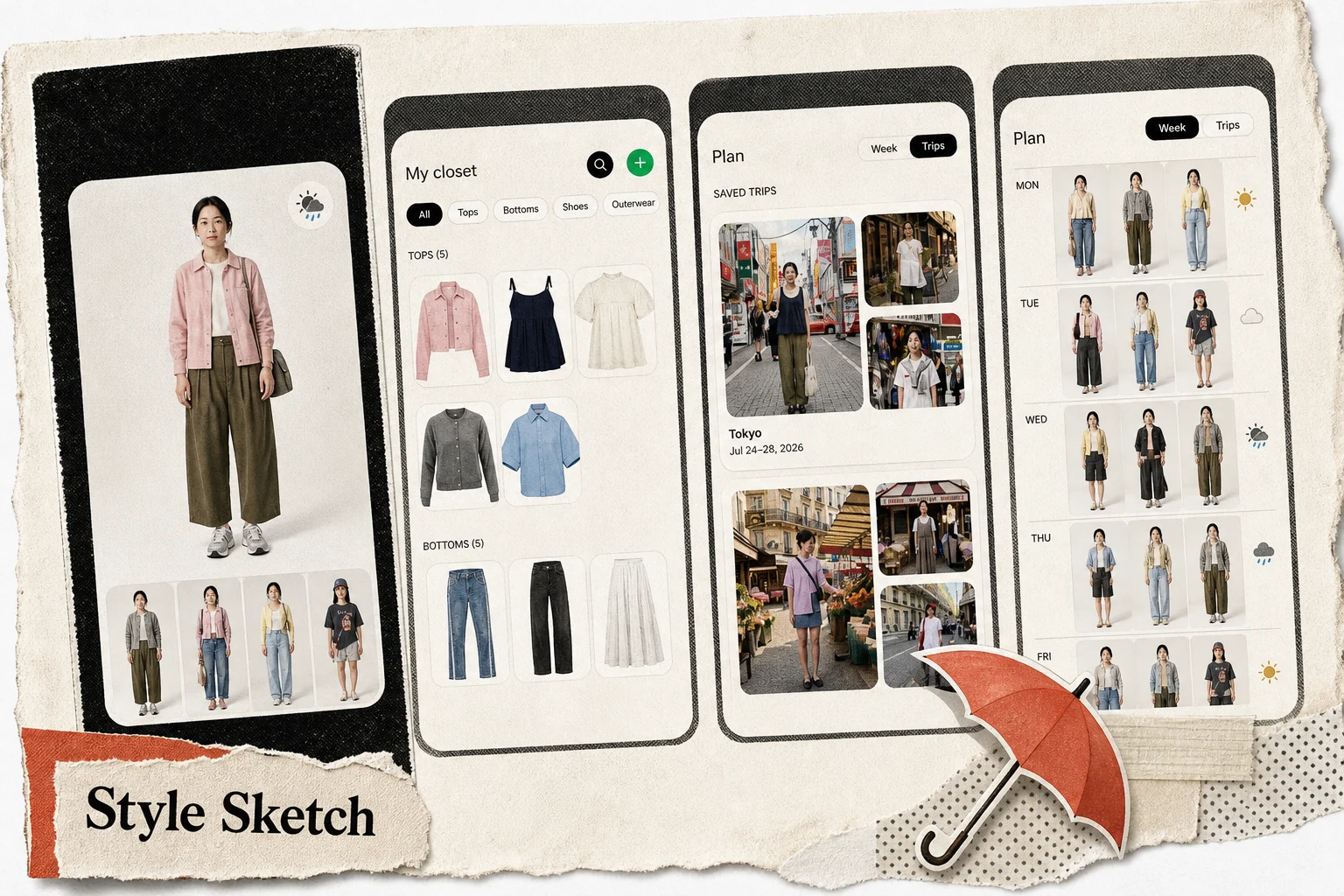
Meta has launched Style Sketch, an AI outfit planner designed to work with clothes you already own. The app builds a digital wardrobe from Instagram photos, but Instagram isn’t required: you can also photograph an item, record a short video, or upload images from your camera roll. Then you can ask for outfit combinations—or pick one specific piece and have the app build a look around it. Style Sketch also offers virtual try-ons. Meta’s app description says outfits appear on a model matched to your body shape and skin tone. That’s a product claim, not an independent verification of how accurately the preview represents a garment’s appearance or fit. The travel feature goes beyond choosing one look. Enter a destination, the length of the trip, and planned activities, and Style Sketch can produce outfits for each day, taking the itinerary and weather forecast into account. In other words, it’s trying to make the digital wardrobe useful for packing, not just browsing. For now, the iOS and Android app is available only in Indonesia, Singapore, and Thailand. Meta hasn’t said whether it will expand to more countries. The launch is a small but concrete example of AI being built around personal information and everyday decisions: the useful question is not only what the system can suggest, but what information people choose to give it and how well its suggestions hold up in practice. That question of access and control is also behind Reddit’s plan to make signed-in visits the default. The company says it will test a primarily logged-in experience in select markets outside the U.S. during the fourth quarter. It hasn’t set a global rollout date, or settled exactly which parts of Reddit will require an account. The shift comes as search referrals weaken: Reddit says they fell by more than one million per week on average in October. The company wants more control over automated scraping of its discussions, including by AI companies, and more information to personalize feeds and target ads. But requiring accounts has not been shown to stop scraping; Reddit describes a goal, not a proven outcome. The company says the logged-out front page, anonymity for signed-in users, and incognito browsing will remain. The practical test will be how those exceptions work alongside the new default—and whether Reddit can protect its content without shutting out people who arrive from search. The consequences of access and oversight are more immediate in CrowdStrike’s account of an AI-assisted espionage campaign. The cybersecurity firm says China-linked actors targeted more than 200 organizations worldwide, but it confirmed intrusions and follow-on activity at nine. Those figures describe different things: a broad target list, and a much smaller number of verified footholds. CrowdStrike attributed the activity to VAPOR PANDA. Its researchers say a human operator directed the ARTEX agent framework, which pursued several attack paths in parallel and changed approaches when one failed. The framework ran mainly on DeepSeek, plus an unidentified commercial model. Recovered transcripts showed the operator giving instructions, including requests to extract administrator passwords and identify computers without CrowdStrike’s Falcon security sensor. At the nine confirmed intrusions, CrowdStrike says attackers deployed a backdoor and then conducted credential attacks, network scanning, and reconnaissance. The campaign relied on established intrusion techniques across systems such as web applications, cloud services, and corporate identity networks. CrowdStrike also reported attempts against at least 12 more organizations, not confirmed breaches. The central caveat is important: this was coordinated use of AI agents under human direction, not an unattended system choosing its own mission—and being targeted did not mean an organization was breached. And data access is central to a very different announcement: Thrive Holdings has agreed to buy ADT in a deal valued at about 15.3 billion dollars in enterprise value. ADT shareholders would receive 10 dollars per share in cash. The transaction still needs shareholder and U.S. antitrust approval, with closing expected in the first quarter of 2027; until then, ADT will operate independently. Thrive is backed by OpenAI, which is also its technology partner. The companies say Thrive’s engineers could work with ADT to improve technology, products, and customer support. But they have not announced any new AI-powered security products, so the deal signals an investment plan, not a product roadmap. ADT says its existing data-protection and privacy policies will stay unchanged, and that any new data sharing would require customer permission. That commitment will matter as the proposed owner explores new uses for technology inside a nationwide security business. Across these stories, the useful thing to watch is how the promises become real controls: what data an AI can use, who can direct it, and whether users retain meaningful choice.