Nvidia board reportedly prepares to oust Jensen Huang
OpenAI’s reported Q3 sales hit roughly $10 billion, but its adjusted operating loss still exceeded revenue.
By Saeed Ezzati7 min read
The audio edition
Listen to this newsletter
0:004:39
Read transcript
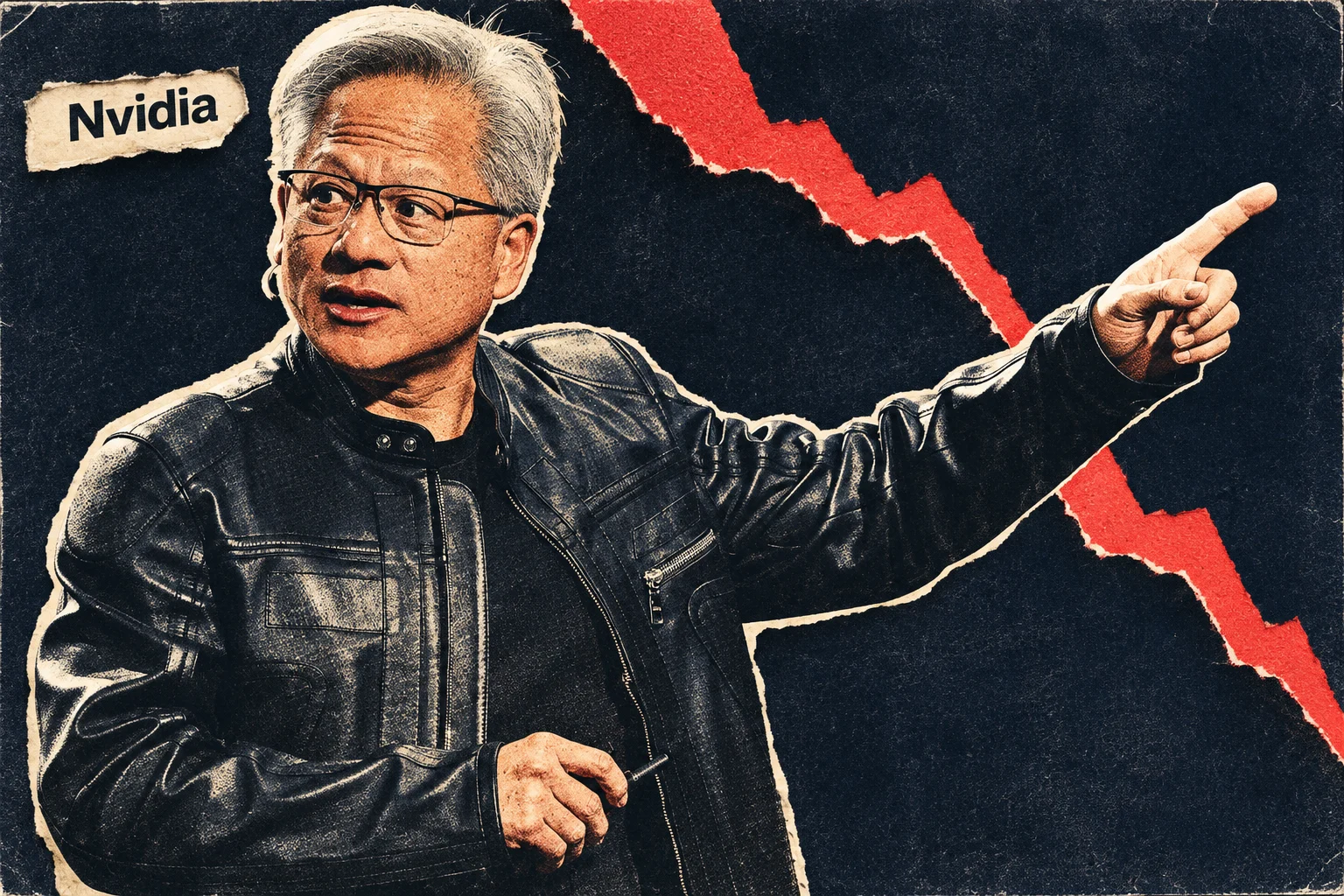
Nvidia’s board is reportedly preparing to oust Jensen Huang, raising an immediate question about who would lead one of the most important suppliers in the AI industry. But this is a report about preparations—not an announced dismissal. The Wall Street Journal, as reported by TechCrunch, said directors could meet as soon as November 11 to consider Huang’s future. Nvidia had not immediately responded to CNBC’s request for comment. Nvidia shares fell more than 7% in after-hours trading following the report. TechCrunch put the decline at about 8% in its snapshot. The same report noted a roughly 11% slide over the preceding five days, but that longer window includes trading before news of the board’s reported intentions. It doesn’t measure investors’ reaction to this report alone. The stakes extend beyond a change at the top. Huang co-founded Nvidia and has led it for 33 years. The company’s chips are used to train AI models and run large AI workloads, putting it at the center of the current boom. Huang has said he has about 60 direct reports. TechCrunch describes him as delegating very little and says Nvidia has no obvious successor or succession plan. So the next concrete developments are whether directors act on the reported preparations and, if they do, whom they select to lead the company. For investors and customers, the leadership question is also a continuity question: whether Nvidia can keep executing with a different person at the helm. On a different front in AI, Google DeepMind is trying to make predictions more specific to the biological context. Its new research model, AlphaGenome 2, predicts how DNA variants may affect particular cell types and states, rather than treating a broad tissue average as the whole story. Researchers can choose a condition from a reference catalog or provide their own single-cell data to guide predictions, without retraining the model. DeepMind reports that, on the TenK10K immune-cell benchmark, AlphaGenome 2 identified 30% of causal variants, compared with 16% for its fine-tuned predecessor. The company also reports improvement in identifying whether variants raise or lower gene activity. Those are company-reported benchmark results, not clinical detection rates. The model is available for non-commercial research, while commercial access is in private preview. DeepMind says it is not validated for clinical use. The practical test is whether researchers can reproduce and extend these results in their own studies—not whether the model is ready to guide patient care. That distinction between impressive growth and demonstrated outcomes also matters in OpenAI’s reported quarterly numbers. Revenue reportedly reached roughly $10 billion in the third quarter, up about 50% from the prior quarter. The figures were reported by multiple outlets, but OpenAI has not confirmed them. The adjusted operating loss reportedly grew to $10.9 billion, even as the adjusted operating margin improved from negative 150% to negative 109%. In other words, the shortfall grew in dollars, but narrowed relative to revenue. The adjusted loss excludes $2.6 billion in stock-based compensation, an important caveat when interpreting the figure. OpenAI president Greg Brockman said enterprise revenue doubled and now supplies most of the company’s sales. The numbers suggest that business demand is driving growth, but has not yet brought operating losses down. Also keep quarterly revenue separate from a reported annualized run rate: the latter is a recent pace expressed over a year, not money collected in a completed year. And in a more operational take on AI, Google has launched the Gemini Decisions API: a tool that scores up to 1,000 bounded questions against one shared input. Rather than writing prose, it returns probabilities and confidence scores. Developers define the available answers, making the service suited to tasks such as routing a request, checking a policy, or choosing an action. Google says the shared input is billed once at 10 cents per million input tokens, with no output-token charges. It reports end-to-end latency of 150 to 250 milliseconds, and says speed stays nearly flat from one to 100 questions. But the speed figures cover inputs up to 16,000 tokens—not the full 256,000-token limit or every request with 1,000 questions. The reported latency should be read within that narrower test range. The API can also return confidence scores that an application could use to send uncertain cases to a person or another system. Across these stories, the useful thing to watch is what turns a report or product claim into evidence: a board decision and a named successor, independent research beyond a company’s benchmark, confirmed financial results, and real-world performance at the scale and latency developers need.