OpenAI aims to train 1,000 small businesses
Workshop completers will get free ChatGPT Plus, with local advisors following up on what proves useful.
By Saeed Ezzati7 min read
The audio edition
Listen to this newsletter
0:003:44
Read transcript
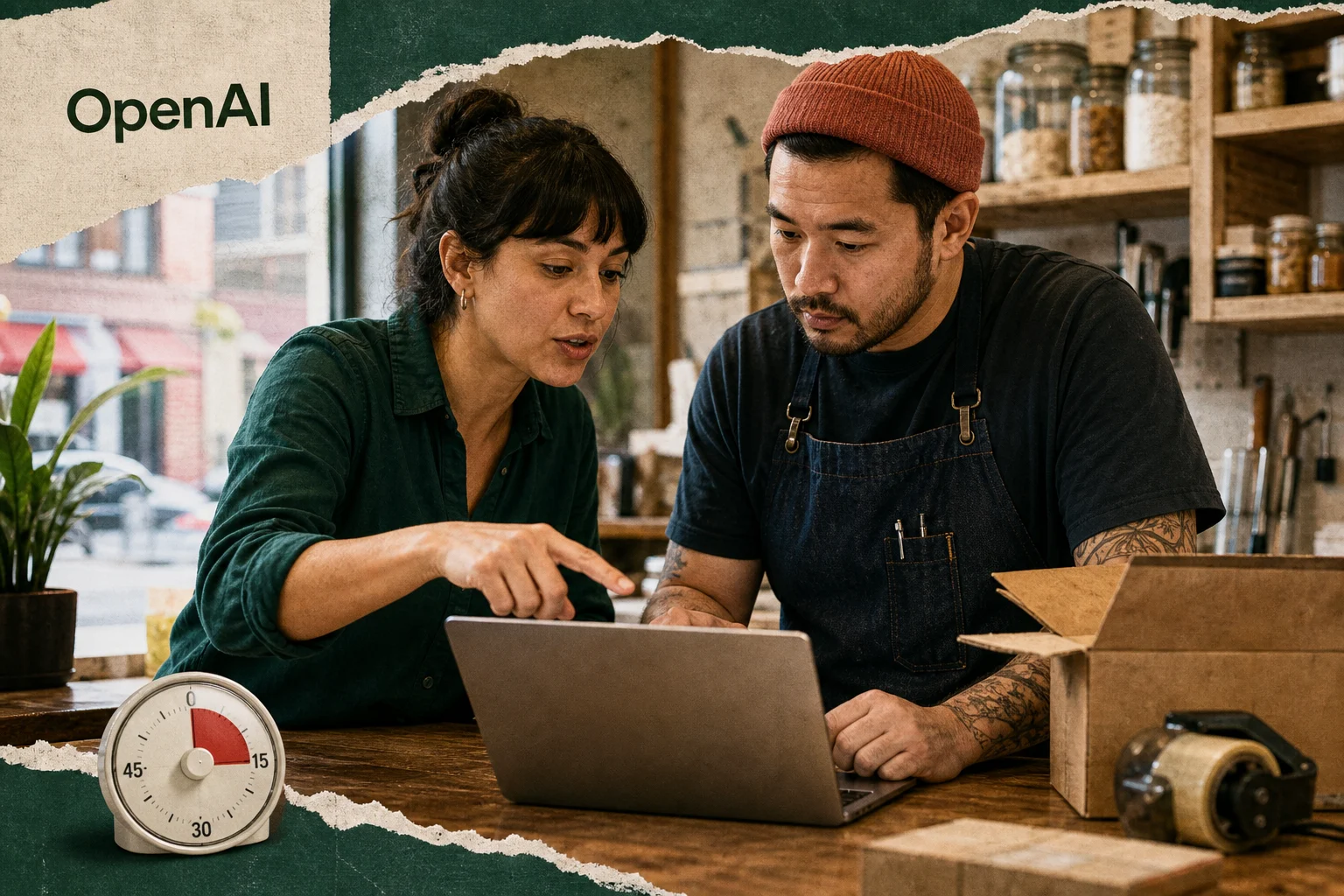
OpenAI and America’s Small Business Development Centers are building a local route for small businesses to learn how to use ChatGPT. Their phased pilot aims to reach at least 1,000 businesses over the coming months, with roughly 150 advisors trained initially. The network represents 63 member organizations and nearly 1,000 centers that already offer free, confidential business advice and training. The plan is to equip those advisors to help owners choose useful tasks, use AI responsibly and assess its value. Some will also learn to lead group workshops. Each participating network is expected to hold at least one hands-on session, modeled on a three-hour format. Owners will try ChatGPT on real business work, leave with an implementation plan and get follow-up from an advisor. America’s SBDC says in-person workshop completers—both advisors and clients—will receive free ChatGPT Plus. Workshop findings will help shape practical and industry-focused guides. There are no training results yet. OpenAI’s accompanying usage figures describe existing adoption, not the pilot’s impact: the company says about four million employees at firms with fewer than 500 people used its products worldwide during one week in September. Nearly one in five worked at businesses with fewer than ten employees. So the test comes later: what owners find useful, what they continue using, and where they need more help. The local advising network gives the effort a practical foundation; follow-up will show whether a workshop turns into lasting changes in how a business operates. That focus on how AI is supported and classified also reaches the tax code. The New York Times, in reporting summarized by The Decoder, says Meta saved $3.9 billion in federal research tax credits in 2025 by classifying AI data centers as pilot models and Nvidia chips as experimental materials. Meta points to $200 billion in research and development spending over five years. But the dispute is whether infrastructure serving commercial products qualifies as experimental research. Meta’s filings warn its claims could be challenged; that is not a ruling that they are invalid. EY reportedly helped develop the approach and is pitching it to other AI-chip buyers. The key question is whether a research incentive is being applied to experimentation—or to equipment used to run a business. And when AI acts on money, Robinhood is putting an approval control in the user’s hands. Its planned in-app agents can research markets, build strategies and place trades for eligible U.S. customers. Each agent gets a dedicated account and customer-set limits; manual approval is on by default, though users can change it. The agents are coming soon, with no launch date announced. Recurring instructions, called Loops, are still forthcoming. Robinhood’s separate plan for weekend trading in selected stocks and funds targets early 2027 and still needs regulatory review. These are distinct rollouts, not one package arriving at once. Approval settings and account boundaries offer guardrails, but customers will still need to understand what they authorize. The same need for oversight and traceability appears in biological research. Google DeepMind says its new SynthID Bio embeds a verifiable origin signal in AI-designed protein sequences and predicted structures. The company reports laboratory tests in which watermarked designs retained performance and natural diversity, including binding comparisons across three targets. Those results have not been independently assessed here. DeepMind’s goal is to make designs traceable in open scientific databases; biosecurity is an intended benefit, not a demonstrated outcome. Across these stories, the useful thing to watch is what happens after deployment: whether people can check the work, understand the limits and intervene when needed.