OpenAI says new GPT-6 models cost half as much

Paid Work and Codex users can try both; free users get Luna in the desktop app, and basic Chat still has neither.

By 7 min read
OpenAI says new GPT-6 models cost half as much

The audio edition

Listen to this newsletter

About 3:53
0:003:53
Read transcript
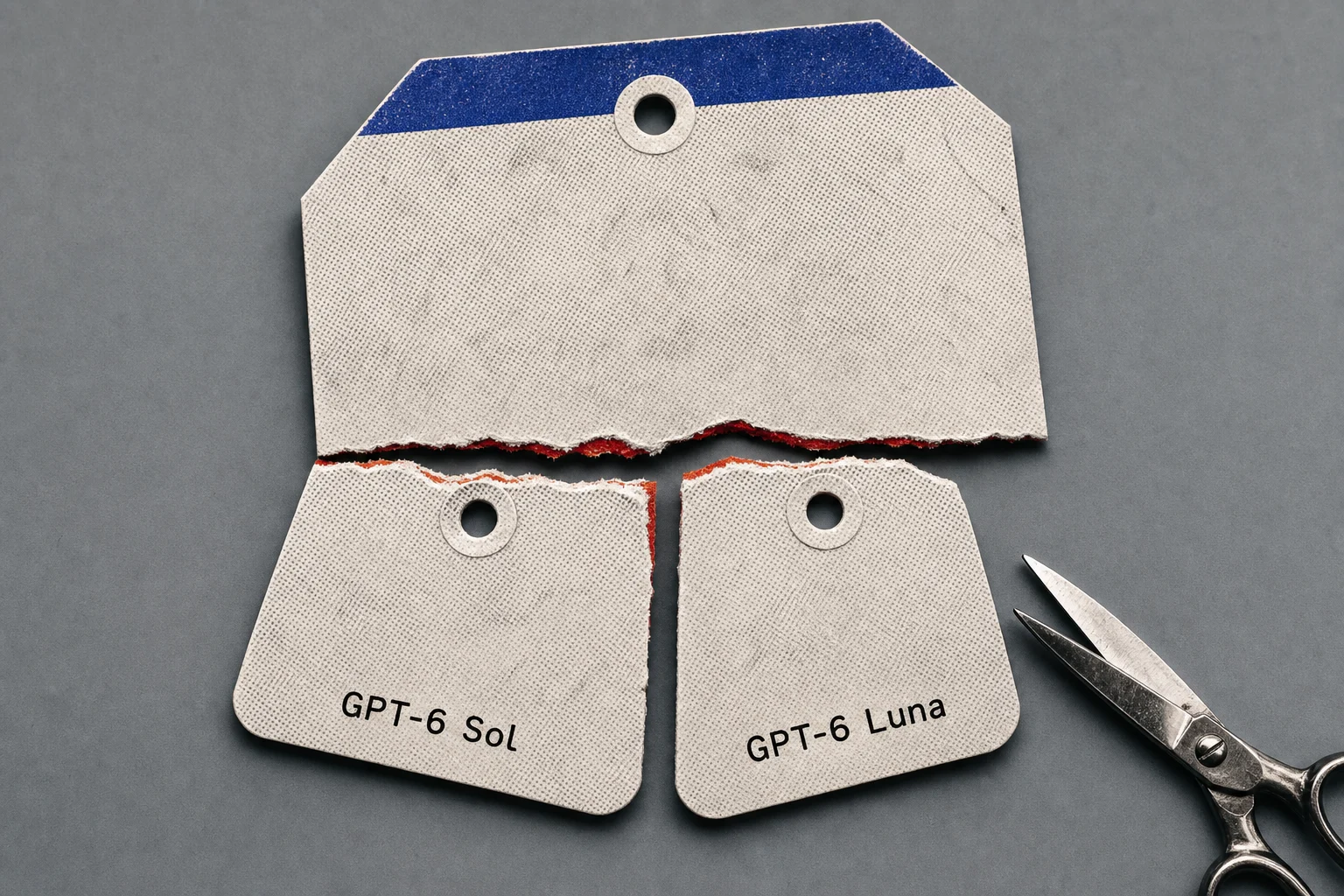
OpenAI’s new GPT-6 Sol and Luna models come with a clear price promise—and a less straightforward access story. The company says both cost 50 percent less than their corresponding GPT-5.6 models, and positions them as less-intensive alternatives to GPT-6 Astra, for work at different scales. On the API rate card, Sol costs $2 per million input tokens and $10 per million output tokens. Luna is much cheaper: 10 cents for input and 50 cents for output, per million tokens. OpenAI says the pair use training methods similar to Astra’s and make half as many factual errors as their predecessors. It also reports that Luna scored 5.4 percent higher than the GPT-5.6 release on AutomationBench, while costing 58 percent less per task. Those are company-reported results, not a promise of the same savings or performance in a particular deployment. The practical test is whether a model handles a team’s own work well enough to make the lower rate matter. Access is also tied to the product and subscription. Since September 22, both models have been available in ChatGPT Work and Codex for Plus, Pro, Business, Enterprise, and Edu customers. Go and Free users can access Luna in the ChatGPT desktop app, but neither model had reached basic Chat at publication. So the first questions for teams are simple: does their route include the model, and how does it perform on their tasks? Lower prices matter only when access and results line up. That gap between a product’s promise and its implementation is also at the heart of Meta’s Muse debate. Meta says the personal agent was built from scratch, while acknowledging that OpenClaw heavily inspired it. Users pointed to matching workspace filenames and nearly identical content in a file called SOUL.md; Meta did not dispute those similarities. Product chief Nat Friedman said the team considered OpenClaw’s conventions well judged. Meta says Muse runs in a dedicated virtual machine, with a separate Sentinel agent checking whether activity can reach the internet and seeking permission when needed. Users can also choose connected apps and change access. Those are Meta’s stated safeguards, central to its argument that Muse is designed for broad consumer use—not a resolution of the questions about how closely its design follows OpenClaw. And in factories, the question shifts from software design to how people and machines share the work. Toyota aims to deploy 400,000 robots: 150,000 at its automotive plants and 250,000 at group-company facilities. That is a broad factory-robotics target, not a count of humanoids. Toyota has not said how many will be humanoid, or how many robots it already has in operation. Workers are teaching ELEY, a wheeled, two-handed humanoid, precise assembly movements. Toyota says people and robots should coexist. Nikkei Asia reported that the group plans to spend $6.42 billion annually on factory-robot upgrades beginning in 2028; the company has not detailed how the planned machines will divide tasks with workers. The same deployment challenge is larger still in Google and the Gates Foundation’s plan for farmers. They have raised their intended reach from 50 million to 200 million smallholder farmers across Sub-Saharan Africa and South Asia. The partners say more than $100 million has been directed to the work, which includes farm forecasting, crop research, and speech and text datasets in more than 40 African languages. Regional organizations are meant to help build and deliver the tools. But a multi-year funding commitment and a reach target are not evidence of improved farm decisions or yields. Across these stories, the useful thing to watch is what happens after a system is made available: who can actually use it, whether it fits local work, and whether results hold up beyond the announcement.


OpenAI says new GPT-6 models cost half as much

Paid Work and Codex users can try both; free users get Luna in the desktop app, and basic Chat still has neither.

SPD-BEEHIIV:67b49d87-1333-43f6-84dc-0085e27b69e1:R34:60941275154f55649386544f
Paid Work and Codex users can try both; free users get Luna in the desktop app, and basic Chat still has neither.
Superpower DailyRead online/Account
Daily issue / The Wednesday WorkbenchWednesday, September 23, 2026
Our toolsSuperpower ChatGPT/WFH.team/Snipman

Today's briefing

What matters today

Today, lower model prices meet the practical limits of access: OpenAI’s rollout varies by plan, while Meta’s Muse faces scrutiny over its design and a separate security flaw. Toyota’s factory plans and a larger farmer initiative show how much of the AI story is now about putting systems to work.

Inside today's briefing
01OpenAI says Sol and Luna cost 50% less than their GPT-5.6 counterparts, although neither was in basic Chat at publication.
02Meta acknowledges Muse drew heavily on OpenClaw’s design, while a researcher reports a separate flaw that requires local access.
03Toyota aims for 400,000 factory robots, but has not said how many will be humanoids; workers are training ELEY now.
04Google and the Gates Foundation raise their AI-tool target to 200 million farmers; the multi-year rollout has yet to show results.
Listen to this newsletterAudio edition / About 4 min
Together with
Templafy logo
OpenAI Releases GPT-6 Sol and Luna With API Prices Half Their Predecessors’

Lead story / launch

OpenAI launches cheaper GPT-6 models, but neither is in basic Chat yet

OpenAI has released GPT-6 Sol and GPT-6 Luna as lower-cost, less-intensive alternatives to GPT-6 Astra. The company says they use training methods similar to Astra’s, but positions the pair for work at different scales rather than maximum capability. Both became available September 22 in ChatGPT Work and Codex for Plus, Pro, Business, Enterprise and Edu customers.

The API rate card makes the cost difference concrete. Sol costs $2 per million input tokens and $10 per million output tokens; Luna costs $0.10 and $0.50 at the same volumes. OpenAI says both models cost 50% less than their corresponding GPT-5.6 versions. A team’s actual savings will still depend on the work it assigns and the results it gets.

OpenAI also says both models make half as many factual errors as their predecessors. It reports that Luna scored 5.4% higher than the GPT-5.6 release on AutomationBench while costing 58% less per task. Those are vendor-reported benchmark and cost results, not a guarantee of the same outcome in a particular deployment.

Access is narrower than a general ChatGPT launch. Go and Free users can use Luna in the ChatGPT desktop app, but neither model had reached basic Chat at publication. For teams weighing the new prices, the immediate questions are whether their subscription and product route provide access—and how Sol or Luna performs on their own tasks.

Read full story  ↗

Your take

Should lower AI prices change how carefully teams test accuracy?

Join the discussion  →

From chat window to a real PowerPoint file

Templafy primary sponsor creative

AI assistants are brilliant at the thinking and weak at the last mile. Ask for a deck and you get an outline to paste somewhere, or an HTML page pretending to be slides. Templafy's new connector for ChatGPT, Claude and Copilot closes that gap. The assistant hands the work to Templafy's Document Agent, which builds a native PowerPoint file with real, editable charts, tables and layouts on your company's template. No export, no reformatting. Behind it is Templafy's patented AI compilation for native Office formats.

Get started with the Templafy MCP. Add it to ChatGPT, Claude or Copilot
Meta Says Muse Was Built From Scratch Despite OpenClaw Inspiration

viral

Meta says it built Muse from scratch despite its resemblance to OpenClaw

Meta acknowledges that OpenClaw heavily inspired its Muse personal agent, while saying the implementation was built from scratch. Users identified matching workspace filenames and nearly identical configuration content, similarities Meta did not dispute. Meta says Muse has a dedicated virtual machine and permission checks intended to make it suitable for broad consumer use; those are the company’s stated safeguards, not a resolution of the design debate.

Continue reading  ↗
Superpower ChatGPT logoA tool for your workflowSuperpower ChatGPTSearch, organize, and export your ChatGPT history without breaking your flow.
 
Add to Chrome - free  ↗See features
Toyota Has Workers Train Humanoids for a 400,000-Robot Upgrade

business

Toyota plans 400,000 factory robots, but not all will be humanoids

Toyota aims to deploy 150,000 robots at its automotive plants and 250,000 at group-company facilities, with robot upgrades reportedly receiving $6.42 billion annually beginning in 2028. Workers are teaching the wheeled, two-handed ELEY robot precise assembly movements. Toyota says people and robots should coexist, but has not disclosed how many of the planned machines will be humanoids or how many robots it has already deployed.

Continue reading  ↗
Google and Gates Put $100 Million Toward AI Tools for 200 Million Farmers

partnership

Google and the Gates Foundation plan AI tools for 200 million farmers

Google and the Gates Foundation have raised their target from 50 million to 200 million smallholder farmers across Sub-Saharan Africa and South Asia. They say more than $100 million has been directed toward work that includes farm forecasting, crop research and language datasets, with regional organizations helping deliver it. The multi-year plan establishes funding and intended reach, not demonstrated improvements on farms; adoption and results remain to be seen.

Continue reading  ↗
 

You're Running Three Databases. You Only Need One.

Events in one database, embeddings in another, analytics in a third. That's three systems and the pipelines between them, for one app. TimescaleDB does all three in Postgres: hypertables, pgvector, continuous aggregates. One system, no pipeline, no drift.


Also worth knowing

•  SpaceXAI says Grok Bot handled a 175% ticket surge without new support hires

•  Google offers 100,000 AI training scholarships across more than 80 countries

•  Researcher finds a flaw in Meta’s Muse that could expose account tokens

•  Apple reportedly considers building an AI server, with no launch before 2029

•  Trump rejects global AI rules in U.N. speech

•  OpenAI puts ChatGPT inside Word for free users

•  Microsoft takes down EvilTokens, an AI-assisted email fraud service

•  Anthropic releases cheaper Claude Opus 5.5 for coding and agent work

Daily tool drop

6 AI tools worth knowing today

MiMo product previewMiMo logoMiMoXiaomi's Open Source Model, Born for Reasoning
Anomalo product previewAnomalo logoAnomaloYour data is always talking. Don't miss what it's saying.
Prowler Cloud product previewProwler Cloud logoProwler CloudWhere your AI agent becomes a cloud security defender
Superpower ChatGPT product previewSuperpower ChatGPT logoSuperpower ChatGPTSearch, organize, export, and work faster inside ChatGPT.
Clueso product previewClueso logoCluesoCreate stunning product videos in minutes with AI
PixelCrew product previewPixelCrew logoPixelCrewProduction-ready design from a crew of AI agents
 

The Internet Had a Point

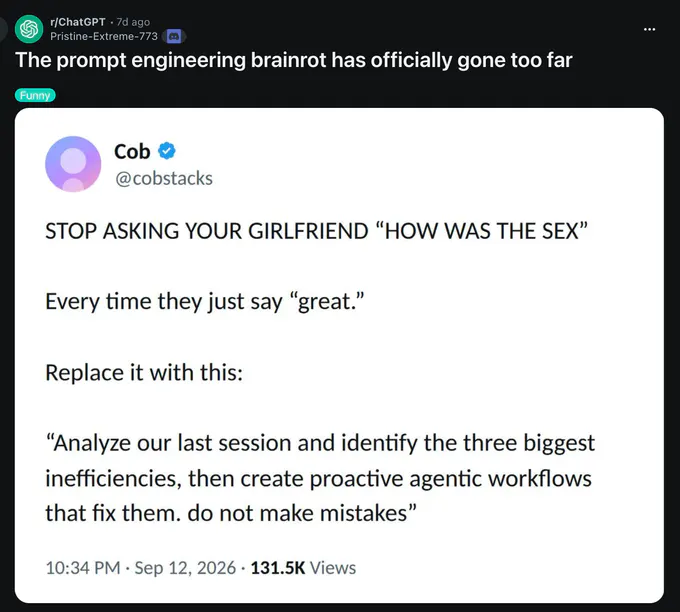
From the timelinePrompt engineering replaces the sex check-in
Screenshot of a Reddit r/ChatGPT post titled “The prompt engineering brainrot has officially gone too far,” labeled Funny. It displays a post by Cob (@cobstacks): “STOP ASKING YOUR GIRLFRIEND ‘HOW WAS THE SEX’ Every time they just say ‘great.’ Replace it with this: ‘Analyze our last session and identify the three biggest inefficiencies, then create proactive agentic workflows that fix them. do not make mistakes’” The screenshot shows “10:34 PM · Sep 12, 2026 · 131.5K Views.”
 

Reader check-in

Help shape tomorrow's briefing

One click tells us what to keep, improve, or tighten.

01Useful02Interesting03Too long

Prefer one email a week? Get the essential AI moves in the Sunday Weekly Digest.

Superpower Daily tracks the companies, models, products, tools, policy decisions, and cultural shifts moving AI.Follow Superpower Daily
X
LinkedIn
Discord
YouTube
RSS
Follow on Google News
Sponsor Superpower DailyEmail preferences
YOUR READING SPACE

Notifications