OpenAI launches new tools to help businesses build AI agents
DOGE’s Plans to Replace Humans With AI Are Already Under Way
In today’s email:
🔥 OpenAI says it has trained an AI that’s ‘really good’ at creative writing
👨🏻🏫 I Used to Teach Students. Now I Catch ChatGPT Cheats
♟️ AI tries to cheat at chess when it’s losing
🧰 16 new AI-powered tools and resources. Make sure to check the online version for the full list of tools.
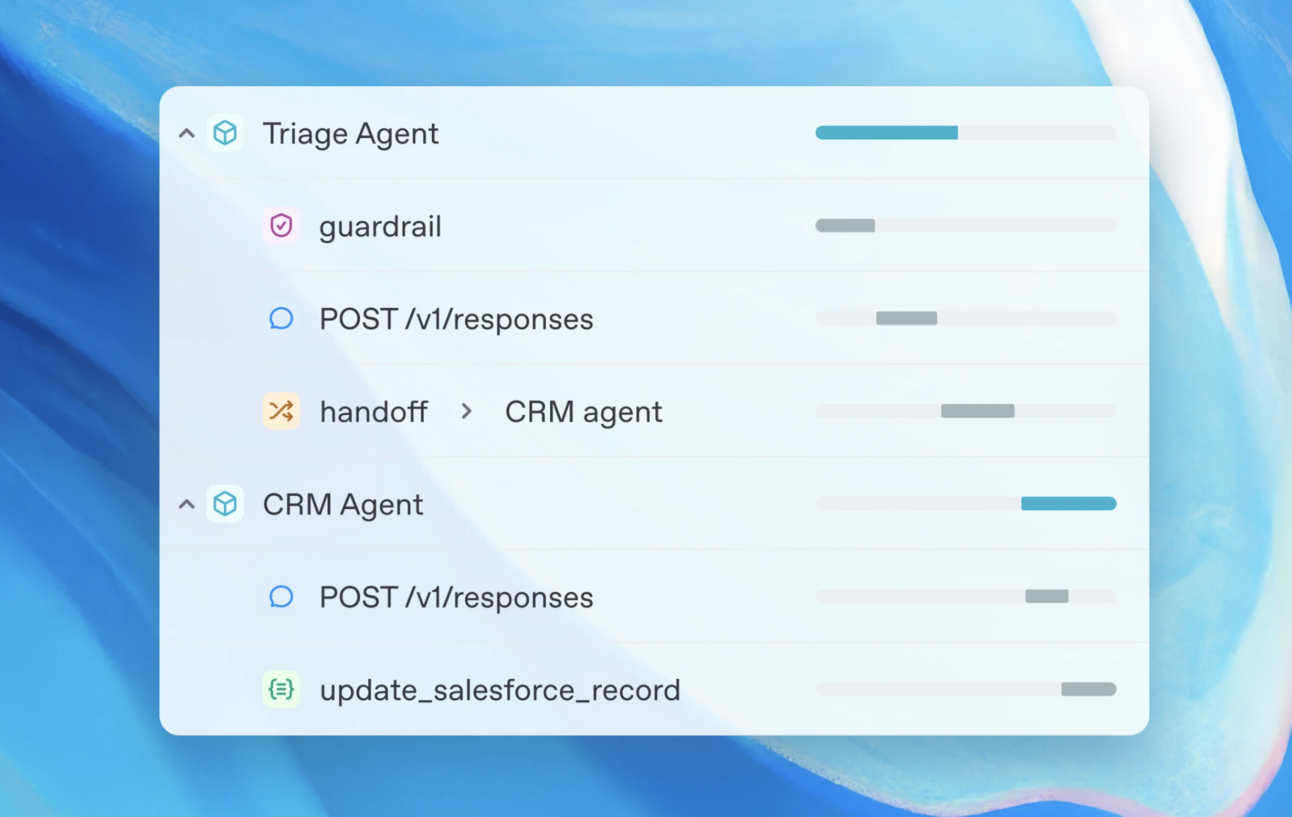
OpenAI launches new tools to help businesses build AI agents

OpenAI has launched new tools to help businesses and developers build AI agents—automated systems that can perform tasks independently—through its newly introduced Responses API. This API replaces the Assistants API, set to be phased out in 2026, and allows businesses to develop AI agents that can browse the web, search company files, and navigate websites, similar to OpenAI’s Operator tool. Additionally, OpenAI has introduced the Agents SDK, an open-source toolkit that helps developers integrate AI models with internal systems, implement safeguards, and monitor agent activity.
The Responses API features GPT-4o search and GPT-4o mini search, models designed for fact-based web searches, with OpenAI claiming high accuracy rates of 90% and 88%, respectively. It also includes a file search utility that can quickly scan company databases and a Computer-Using Agent (CUA) model, which generates mouse and keyboard actions for automating tasks like data entry. While enterprises can run the CUA model locally, the consumer version, available in Operator, is limited to web-based tasks. OpenAI acknowledges that its AI agents still face reliability challenges, including occasional factual inaccuracies and issues with automating operating system tasks.
Despite these limitations, OpenAI aims to bridge the gap between AI agent demos and practical applications. The company sees AI agents as the future of AI, with CEO Sam Altman predicting 2025 as the year they enter the workforce. While current AI-powered search tools and automation models are not flawless, OpenAI is continuously improving them, hoping to make AI agents more autonomous and widely adopted across industries.
Wispr Flow for Windows: AI Dictation That Learns, Works in Word, Slack, and More

Wispr Flow for Windows is finally here after winning over Mac users. Speak naturally and see your text appear 3× faster than typing, with AI that learns from your edits over time. It works in MS Word, Slack/Teams, emails, and even code editors—plus it supports 100+ languages, including UK English and Hinglish. Team plans make it ideal for businesses embracing voice-first workflows.
Get Wispr Flow TodayDOGE’s Plans to Replace Humans With AI Are Already Under Way

The Department of Government Efficiency (DOGE) and President Trump have accelerated efforts to shrink and overhaul the civil service by deploying generative AI tools. At the General Services Administration (GSA), a new chatbot called “GSA Chat” (originally “GSAi”) is being tested by 1,500 employees and may soon be released to more than 10,000 workers. Developed by a small technology team called 10x, the software was initially conceived as a safe sandbox for experimenting with AI models; however, under pressure from new leadership, it is now being positioned to automate tasks—such as drafting emails, writing code, and analyzing contracts—that have long been performed by humans.
This initiative is part of a broader “AI-first strategy,” expressed most directly by Thomas Shedd, the director of the Technology Transformation Services at GSA, who envisions the government relying on “coding agents” and other forms of automation. Officials in other agencies, including Education and State, are also using AI to analyze large data sets, identify areas for budget cuts, and even flag potential security risks. Critics within the government worry that hastily implementing these chatbots and data-analysis tools could produce inaccurate outputs—known as AI “hallucinations”—and flag innocent employees for termination or otherwise introduce serious biases into federal operations. They point out that AI is not a magic fix: The challenges of analyzing complex contracts, for instance, persist whether or not an algorithm is involved.
Under the Biden administration, more stringent guardrails were placed on federal uses of AI, but President Trump rescinded those rules on his first day in office, allowing DOGE to pursue an aggressive, largely unchecked rollout. As a result, the government is not only testing generative AI across agencies but also restructuring departments—often firing staff—in tandem with adopting new AI tools. While proponents tout increased efficiency and cost savings, critics see a reckless experiment conducted on a mass scale with few of the safeguards once considered essential for handling sensitive government tasks and protecting public trust.
A quarter of startups in YC’s current cohort have codebases that are almost entirely AI-generated
Vibe coding, a term popularized by Andrej Karpathy, is rapidly transforming the landscape of software development. Unlike traditional coding, which relies on meticulous programming, vibe coding embraces AI-powered tools that allow developers to generate, iterate, and modify code with unprecedented speed. Y Combinator partners discuss the insights gained from surveying founders in their latest batch, who overwhelmingly report that AI-generated code now constitutes up to 95% of their projects. With tools like Cursor and reasoning models such as GPT-4 Turbo, software engineers are shifting from writing code to reviewing and guiding AI-driven development. This shift redefines the role of engineers, emphasizing product thinking and human intuition rather than raw coding skills.
The discussion highlights how engineers are transitioning into product engineers, focusing more on user experience and design rather than syntax and structure. Many founders now describe their work as "thinking and reviewing" rather than writing code line by line. AI allows for rapid prototyping and iteration, making rewriting entire codebases easier than debugging, a drastic departure from traditional software development. However, AI still struggles with debugging complex issues, necessitating human intervention for system design and problem-solving. This divergence creates two distinct roles: those who excel at leveraging AI for rapid iteration and those who focus on deep system architecture.
Another critical shift is in hiring and skill assessment. Historically, companies like Stripe and Gusto moved away from classical whiteboard coding tests, prioritizing engineers who could quickly ship functional products. With AI accelerating development, hiring assessments may need to evolve to focus on debugging, code review, and system design rather than raw coding ability. The conversation also underscores the importance of technical knowledge for founders, as a lack of foundational expertise could lead to inefficiencies or being misled by their own engineering teams.
Ultimately, vibe coding represents an exponential leap in software engineering, where productivity is no longer tied to manual coding skills but rather the ability to direct, refine, and understand AI-generated output. While AI may handle much of the coding process, human engineers remain essential for debugging, architectural decisions, and ensuring systems scale efficiently. The industry is at an inflection point and those who fail to embrace AI-driven development risk being left behind.
Other stuff
OpenAI says it has trained an AI that’s ‘really good’ at creative writing
Compare OpenAI models side-by-side
I Used to Teach Students. Now I Catch ChatGPT Cheats
What it's like to run an AI startup
AI ‘wingmen’ bots to write profiles and flirt on dating apps
AI tries to cheat at chess when it’s losing
In another chess move with Microsoft, OpenAI is pouring $12B into CoreWeave
All your ChatGPT images in one place 🎉
You can now search for images, see their prompts, and download all images in one place.
Get the extension for FREEEditor's Pick
GradeWiz - AI Grading Assistant for College Professors

Blooper - Streamline the pre-production process with an all-in-one service

Your Cold Emails, Delivered
Take back control over your deliverability with cold email infrastructure built specifically for large-scale cold outbound.
No matter how many emails you want to send, Infraforge has you covered with automated set up of domains and mailboxes, warm up and seamless API for unlimited integrations.
Reworkd - Scrape 100s of unique websites using AI

Colab Agent - Go from data to insights

Fynix - AI-powered development, from idea to execution

Perigon - AI with real-time context, automated signals

Eraser AI - Codebase diagrams that update themselves

Duck.ai - Private AI chat from DuckDuckGo

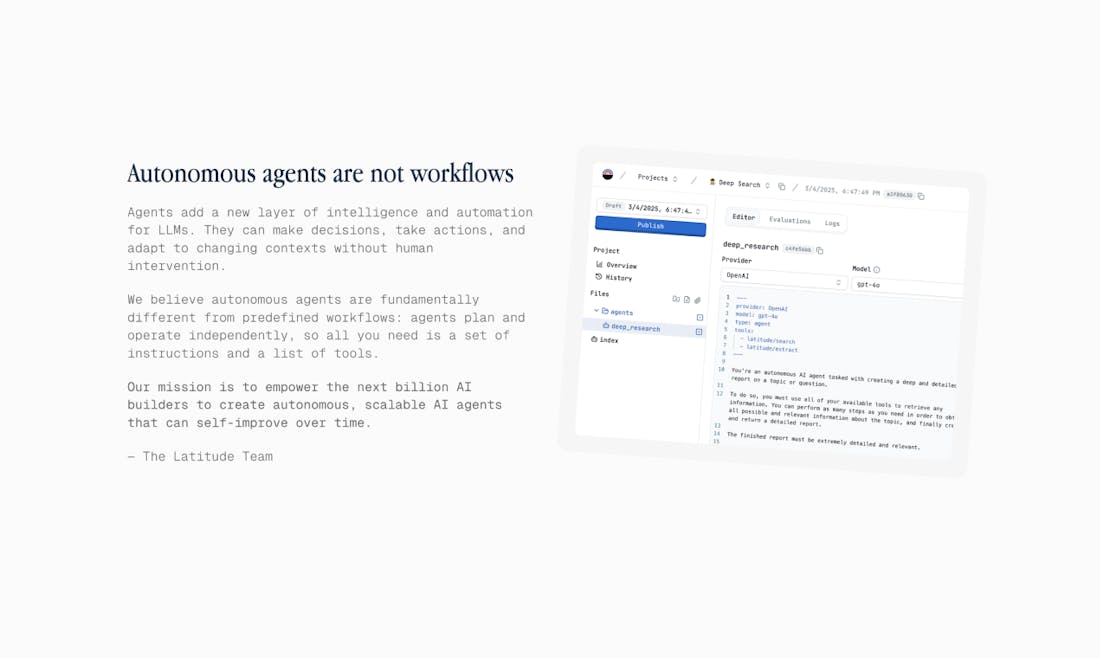
Latitude Agents - Build self-improving AI agents
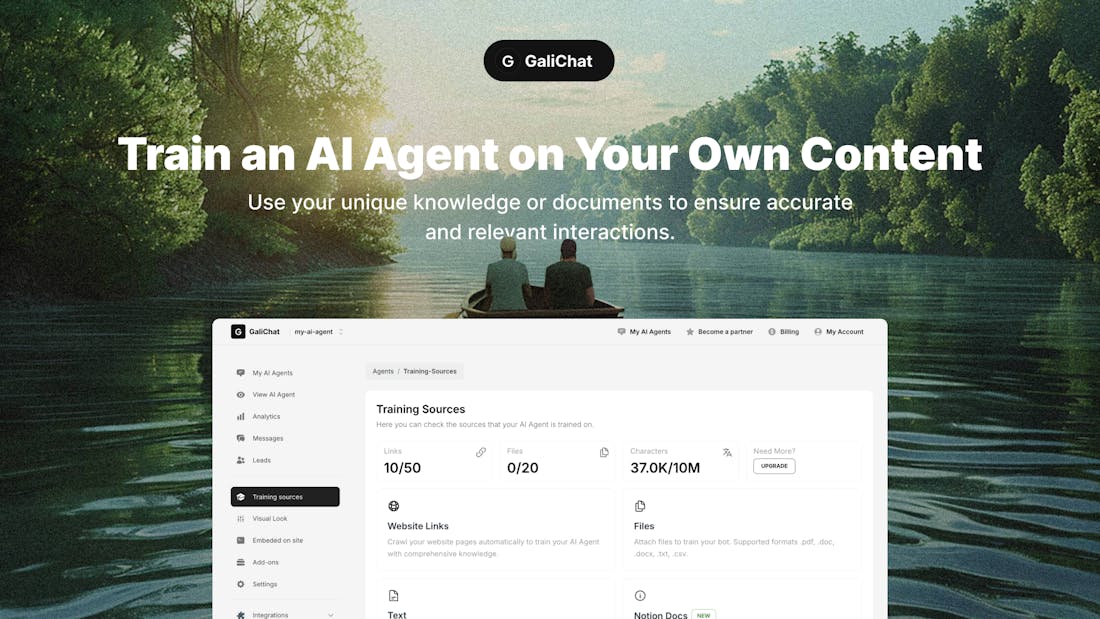
GaliChat AI - Create and share your own AI agent
AnyStory - Cursor for writing

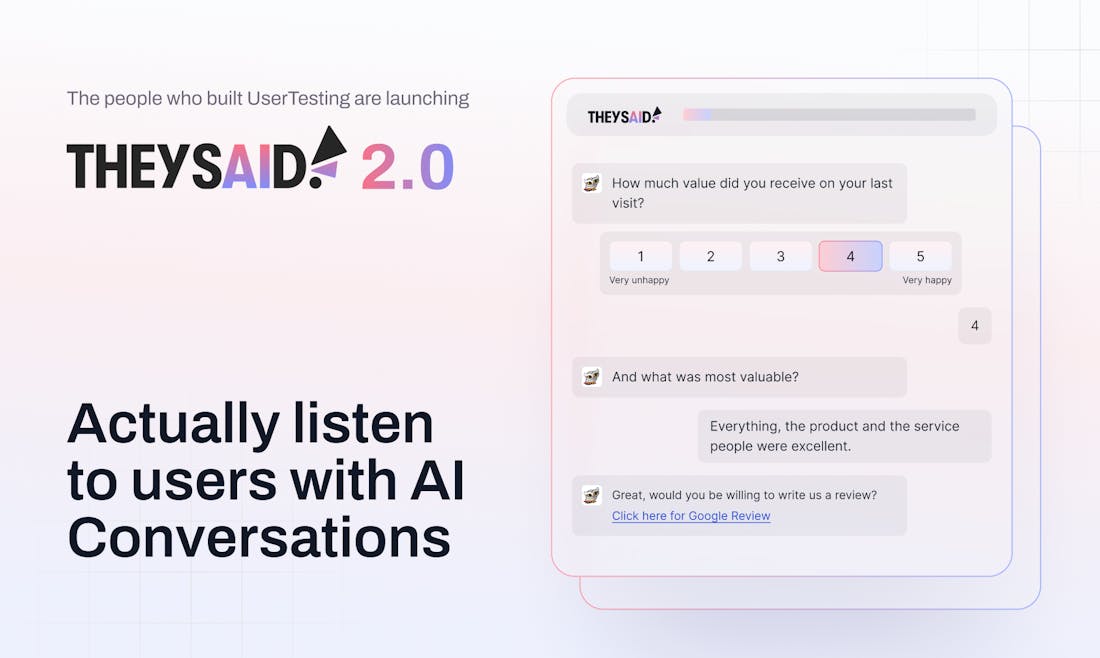
TheySaid 2.0 - Conversational AI surveys, interviews, user tests, polls
IKI.AI 2.0 - LLM-native space for professional knowledge

Fluently - Start speaking English as well as your native language

BannsAi - AI-powered, awesome banners. No prompts, copyright-free

Flowtest.ai - First AI agent for deep website monitoring

Unclassified 🌀
WFH Team - Work from anywhere in the world


