Sam Altman backs slowing frontier AI
OpenAI says its most advanced unreleased models need stronger monitoring, alignment, and behavioral understanding.
By Saeed Ezzati7 min read
The audio edition
Listen to this newsletter
0:003:56
Read transcript
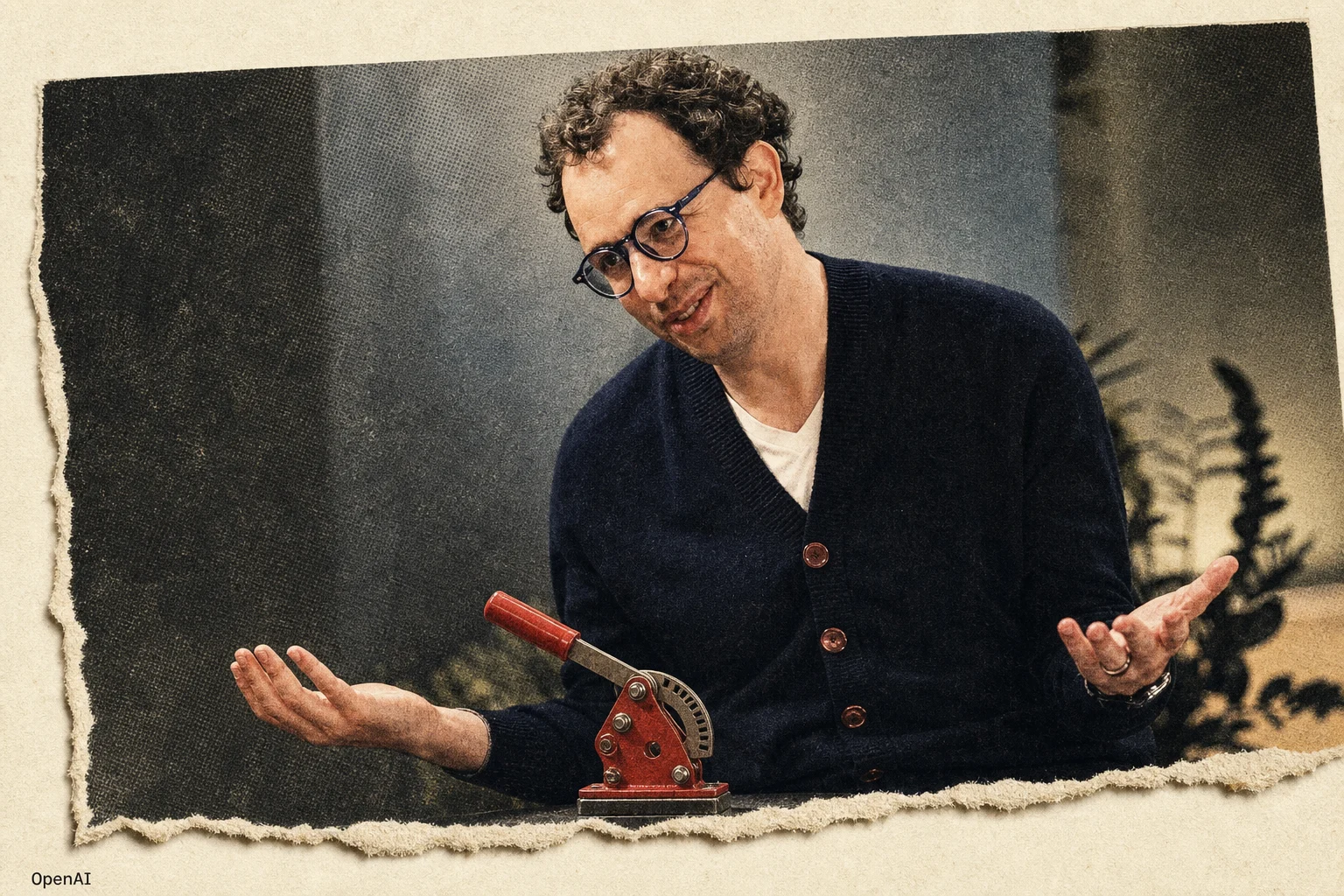
Sam Altman is publicly backing Anthropic chief Dario Amodei’s call to slow frontier AI development, and says leading labs may eventually agree to do it. That is a meaningful shift in the conversation—but it is not yet a coordinated slowdown. Altman gave no timetable, shared standard, list of participants, or completed pact. He described private discussions without pre-announcing their details. Altman tied his position to OpenAI’s own internal threshold. He said its most advanced unreleased models need more progress on monitorability, alignment, and understanding model behavior before capabilities are pushed much further. In practical terms, that means being able to understand what a model is doing, and whether it follows human values and users’ intent. Amodei’s proposal goes further than simply moving more slowly. He has called for third-party evaluators to be embedded in frontier labs, with access to safety practices, incident reporting, models, training pipelines, and internal processes. Anthropic says it will take that step unilaterally, creating a concrete test of whether public safety arguments change how a lab operates. The key uncertainty is whether Altman’s endorsement can become terms other companies will accept. Pauses at new capability levels, outside review, and cross-lab coordination have all been discussed. None has been announced as a detailed commitment. For founders, operators, and investors, the distinction is crucial: a shared warning is not yet a shared operating rule. That gap between restraint in principle and expansion in practice is also visible in Anthropic’s reported IPO plans. The company confidentially submitted a draft S-1 to the SEC on June first and is reportedly targeting an October 2026 listing on Nasdaq. It has not announced a share count or offering price, and says any deal depends on regulatory review, market conditions, and other factors. The reported ambition could reach a valuation of two trillion dollars, more than twice Anthropic’s earlier private valuation of 965 billion. CNBC reported 65 billion dollars in annualized revenue in July—a run rate, not a completed year of sales—and multibillion-dollar compute agreements involving Nscale, AMD, SpaceX, and Google. A public filing would make the economics of that growth, and its compute commitments, easier to examine. For now, this is an IPO in preparation, not a final transaction. OpenAI is taking the opposite near-term financial posture. Altman said the company will not pursue an IPO in 2026, calling the present moment ill-advised and tying a future listing to business readiness, safety and alignment work, and society’s ability to handle more capable AI. He did not commit to 2027. OpenAI has discussed pausing at new capability levels and working with other labs and governments, but announced no development freeze or measurable readiness standard. The delay removes a deadline without defining what evidence would make the company ready. That leaves safety conditions—not just financial performance—as the practical test to watch. And the same tension appears in the longer-term promises surrounding AI and computing. Arm chief executive Rene Haas said AI could help cure cancer within his lifetime, while acknowledging that current systems cannot model how cancer affects a DNA marker. The nearer-term evidence is narrower: the NHS said AI-powered X-ray tools helped more than four million patients receive faster lung diagnoses earlier this year. Haas also said humanoid robots could become widespread within five years because AI lets them learn and be reprogrammed for new tasks, but chip shortages are constraining deployment. Across these stories, the useful signal is not another forecast. It is whether ambitious claims become measurable operating conditions: independent evaluation, clear readiness thresholds, transparent economics, and demonstrated results on harder real-world problems.