Developers run a fruit fly brain map in Minecraft
Gemini Notebook adds voice chats and study formats; mobile lecture recording is planned for next week.
By Saeed Ezzati8 min read
The audio edition
Listen to this newsletter
0:003:56
Read transcript
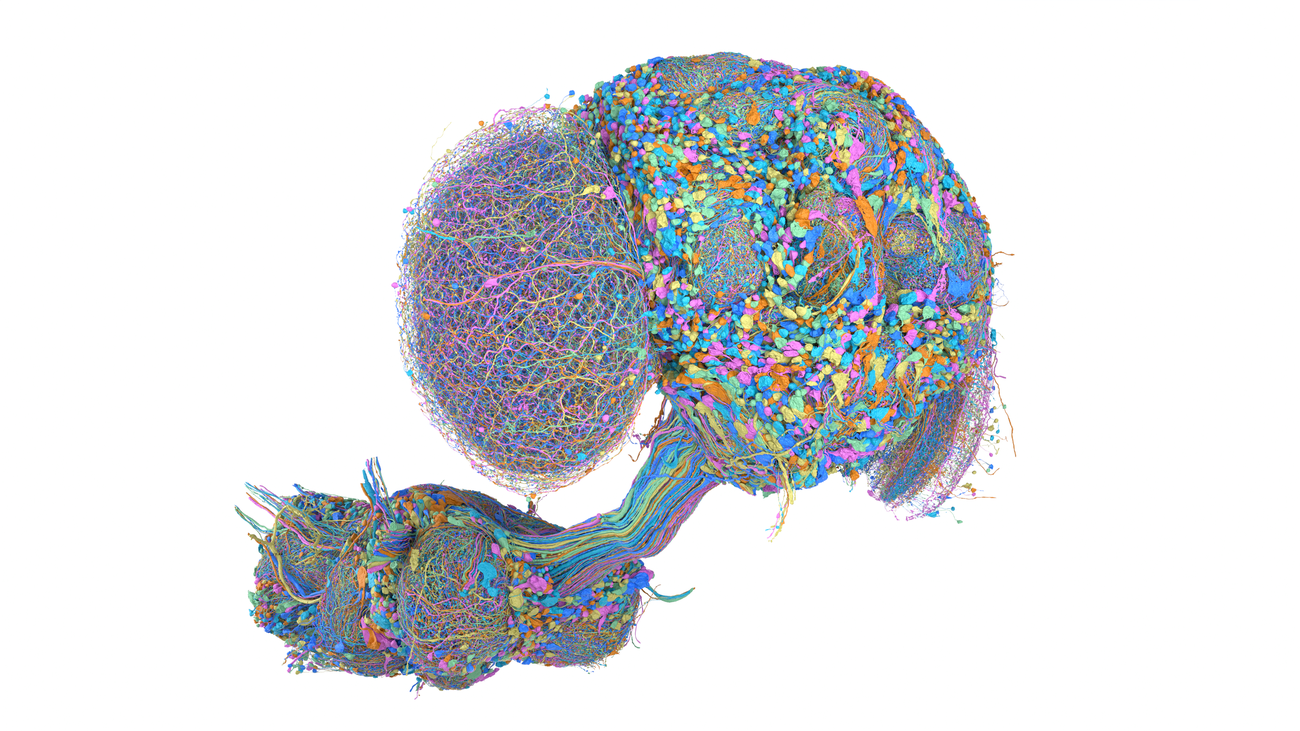
AI is moving from generating outputs to becoming part of a larger workflow—and one striking example starts with a fruit fly. Google Research and HHMI Janelia have released MaleCNS v1.0, a complete, proofread wiring diagram of an adult male fly’s nervous system. It maps more than 166,000 neurons and 125 million synaptic connections across the brain, optic lobes, and ventral nerve cord, the structure analogous to a spinal cord. Developers quickly turned that reference into experiments. The map has appeared in Minecraft, Doom, Beat Saber, and even bitcoin-trading projects. One Minecraft implementation said it ran all 166,700 neurons, using simulated neural activity to drive a virtual fly’s movement. 404 Media reported that the project drew millions of views within a day. The underlying science is substantial. AI helped stitch millions of two-dimensional electron-microscope images into three-dimensional neural structures, which Janelia experts then verified and annotated. The map is browsable and downloadable through Neuroglancer, Google’s open-source visualization tool. Paired with an earlier female connectome, it can help researchers compare structural differences associated with courtship, aggression, and regions that otherwise look similar. But the important boundary is easy to lose in a compelling demo. MaleCNS is an anatomical wiring reference, not a living or conscious digital fly. It does not capture the animal’s complex biochemistry, sentience, or conscious perception. Its value is that an open scientific map can become both a research instrument and a simulation playground. The useful question is not whether the virtual fly is alive, but what new behaviors become testable when detailed structure is made accessible to developers. That same shift—from raw output toward a fuller workflow—is showing up in study tools. Google is rolling out real-time voice conversations in Gemini Notebook on Android and iOS, in nearly 100 languages. The company says replies are grounded in the sources inside a user’s notebook, and users can interrupt or ask for step-by-step guidance. Next week, Google says the mobile app will add an audio recorder for lectures and thoughts, storing those recordings alongside notebook sources for later chats, citations, edits, and review. The update also adds quizzes, flashcards, infographics, and roughly 60-second video overviews. The practical test is whether one source collection produces a more focused study routine, rather than simply more generated material. The emphasis on surrounding context matters for privacy too. ZuckOff, built by Polish developer Pawel Szydlowski, detects Bluetooth broadcasts from Ray-Ban Meta, Oakley Meta, and Snap Spectacles, then estimates rough proximity. It can flag a compatible device, but it cannot identify the wearer, pinpoint the glasses precisely, or tell whether they are recording. The free app scans on demand; a 25-dollar Pro version adds history, background monitoring, CSV export, and a widget. It makes certain smart glasses more visible to bystanders, without resolving the larger question of conduct or consent. And in software, the work around generation is becoming the measurable bottleneck. BairesDev’s Q3 2026 Dev Barometer surveyed 705 developers across more than 60 countries and 41 enterprise CTOs. Forty-two percent said AI writes at least half their code, up from 12 percent a year earlier. Developers reported saving 13 coding hours per week, but 67 percent said they spend more time reviewing AI-generated code, and 52 percent more time debugging AI-introduced problems. The survey is directional, not a census: many respondents were BairesDev applicants, and the CTO sample was small. Still, only 7 percent said shipping had been entirely delegated to AI. Across these stories, the signal is consistent: watch the validation layer—human review, source checking, privacy boundaries, and simulated-world caveats—as generation becomes cheaper.