Harvard puts AI professors in a $699 bootcamp
OpenAI is testing a web standard for agent-ready sites, while MIT finds chatbot help can weaken unaided judgment.
By Saeed Ezzati9 min read
The audio edition
Listen to this newsletter
0:003:32
Read transcript
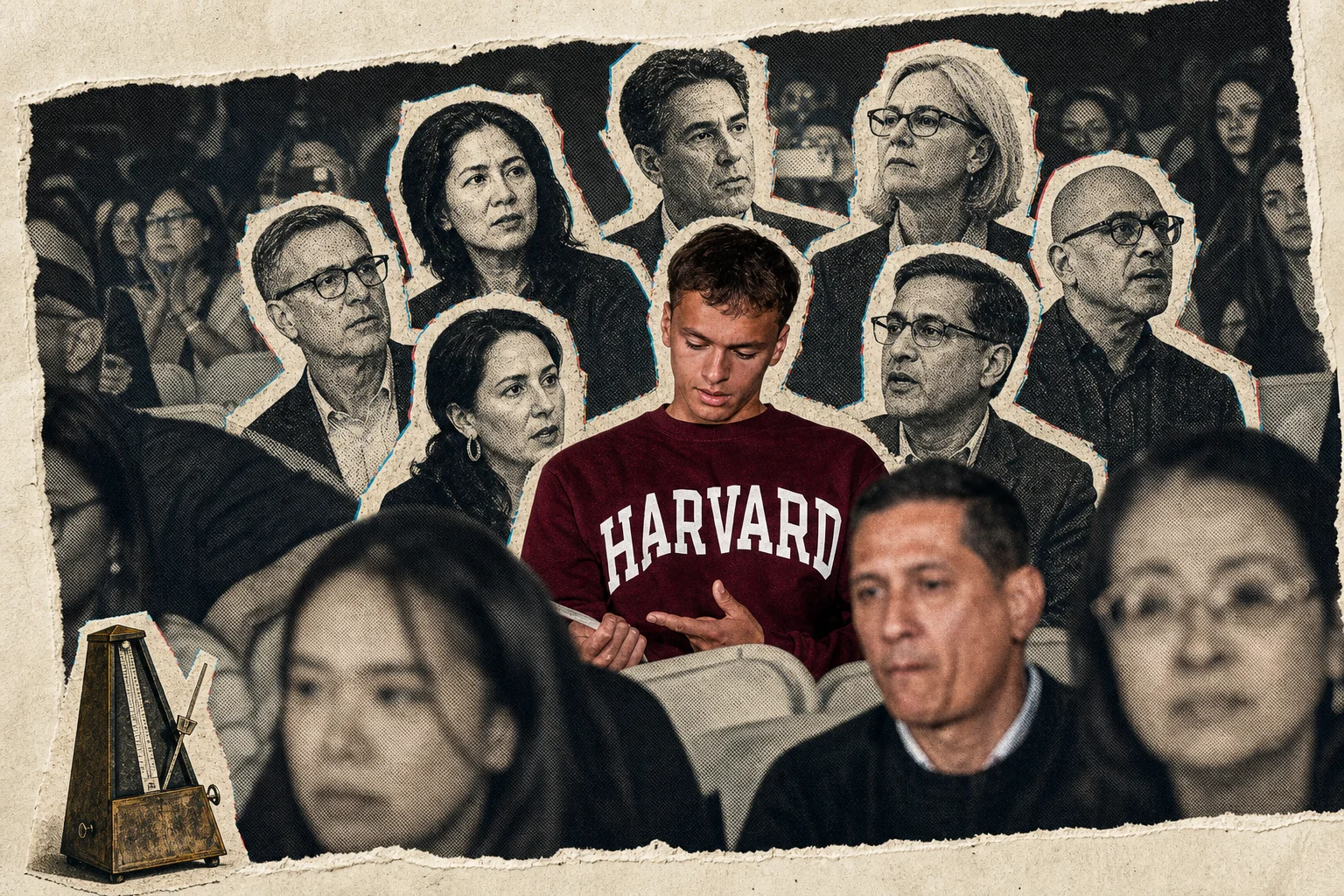
Harvard Business School is turning faculty expertise into a rehearsal layer for startup founders. Its HBS Foundry bootcamp puts AI versions of seven volunteer professors into an eight-week program costing $699. Founders can repeatedly practice investor pitches, sales calls, and board meetings with those avatars before taking the real conversation to investors, customers, or directors. The design is deliberately narrower than replacing a professor. The bootcamp is not an HBS degree program and offers no academic credit. It combines the avatars with live expert sessions, then culminates in an opportunity to pitch investors for $100,000. Harvard says 760 founders have participated so far, including people who may not have access to major innovation networks. The participating faculty members were involved in interviews, recording sessions, testing, and continuing feedback. That matters because the avatars are meant to reflect specific expertise, including venture capital, business-model design, board dynamics, and startup strategy. Professor Shikhar Ghosh says the goal is to help founders arrive better prepared, so scarce live time can focus on questions that require human judgment and conversation. That division of labor is the real product. The avatar supplies repetition and faculty-modeled challenge; the live expert supplies accountability, context, reputation, and care. It can make practice more accessible, but it does not turn simulated feedback into a credential—or into final authority over a founder’s company. Harvard is effectively testing whether AI can make human judgment more valuable by reserving it for the moments that matter most. That same boundary between assistance and authority appears in Sam Altman’s latest warning. In an interview with David Senra, the OpenAI CEO said AI power could become concentrated among too few companies or individuals, and argued that people should retain meaningful control over the technology’s direction. He also acknowledged that his expectation of rapid disruption after GPT-4 was early. Adoption is slower because companies must rework software, data access, compliance, budgets, and roles. For builders and investors, that points to a longer implementation cycle—but potentially more small businesses as AI lowers the cost of starting one. And the question of what users retain is central to an MIT Media Lab study led by Pattie Maes. With chatbot help, participants were initially 21 percent better at spotting fake news. By week four, they were 15 percent worse than before the study when working unaided. Direct-answer systems were associated with greater reliance, while Socratic, question-based systems were associated with stronger later independent performance. Roughly a quarter of participants felt more capable despite that decline—a warning that satisfaction can measure reduced effort, not retained judgment. Finally, OpenAI is testing whether agents can act more directly without surrendering the user’s context. Its ten-day WebMCP Challenge promotes an experimental standard that lets websites expose named JavaScript functions with typed inputs, so an agent can call a tool inside an existing browser session instead of guessing through the interface. The idea has support from partners including Chromium, Cloudflare, Shopify, Vercel, Render, and Netlify, but it is not deployment-ready: Chrome 146 requires a developer flag, and Firefox, Safari, and Edge had not shipped implementations. Across these stories, watch for systems that scale practice and execution while deliberately preserving the human capabilities—judgment, control, and independent skill—that adoption can otherwise erode.