Apple gives Siri screen context in macOS 27
New Mac tools let Siri search files and messages, but its AI features require an M1-or-later machine.
By Saeed Ezzati8 min read
The audio edition
Listen to this newsletter
0:003:04
Read transcript
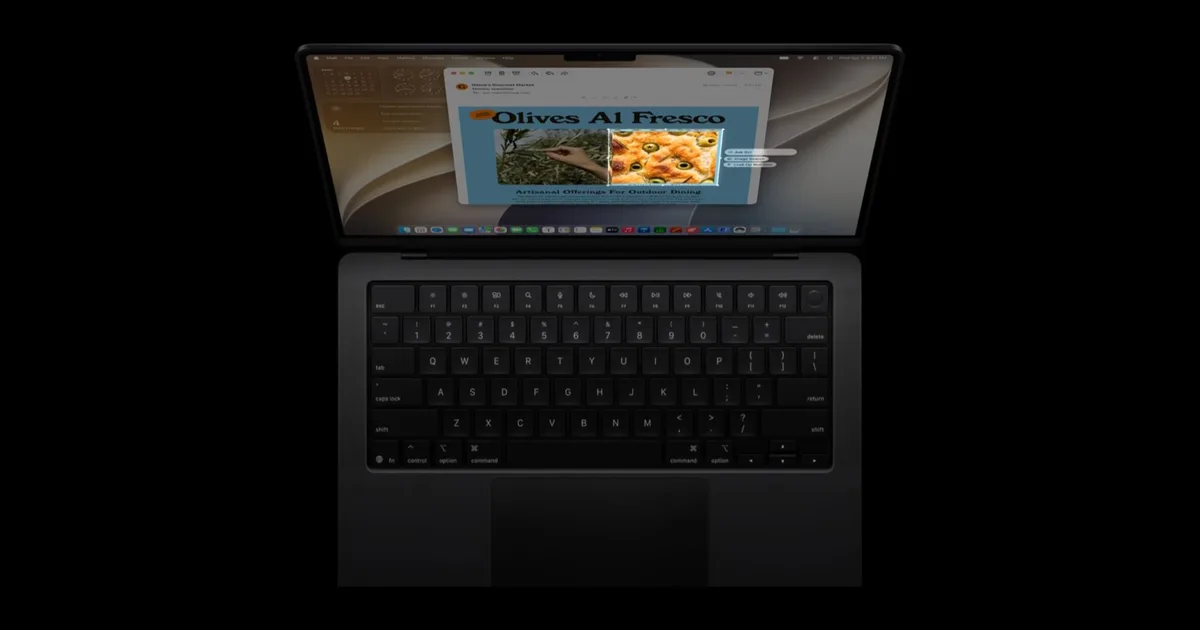
Apple has released macOS 27 Golden Gate with a redesigned Siri that can read the Mac screen—and work from what you already have open. Add the focused window with Command-Shift-Space, or select a region with Command-Shift-6. Siri can then answer questions, summarize material, search images, and take actions. Spotlight now accepts Siri questions, filters results into Applications, Files, Actions, or Clipboard, and can run Shortcuts. TechCrunch also found Siri retrieving details from files, emails, and messages, including trip dates and membership IDs. The assistant moves into writing too: select text for proofreading, improvement, or rewriting, or ask Siri to draft inside a text field. A dedicated Siri app syncs conversation history privately through iCloud, while Safari can organize tabs and track pages for price drops, restocks, policy updates, and new posts. The important caveat is access. Apple Intelligence and Siri AI require an M1-or-later Mac or MacBook Neo, and Siri AI begins as an English beta. French, Japanese, Korean, Portuguese, and Spanish support is planned for October. Apple is making the Mac more context-aware; the real test is whether people trust Siri with that screen and personal data during ordinary work. That question of trust also appears in OpenAI’s reported Project Lily. 404 Media says hundreds of contractors read anonymized ChatGPT prompts, summarize user intent, compare generated replies, and score them for model improvement. OpenAI says eligible chats pass through Privacy Filter, but acknowledges it can miss uncommon identifiers or misunderstand ambiguous references. For Free, Plus, and Pro accounts, improvement is enabled by default, though users can opt out. Temporary Chats are excluded from training and are retained for 30 days for safety. The friction here is not only whether data is filtered, but whether users clearly understand that humans may review prompts. The same boundary between capability and control is visible in a dispute over chips. Anthropic CEO Dario Amodei supports restricting advanced AI chips and chipmaking equipment from China, while opposing a ban on Chinese open-weight models. China’s Foreign Ministry says confrontation will undermine global AI governance. Amodei also argues that serious safety testing would need China’s participation. The exchange offers no shared framework for reconciling that cooperation with hardware restrictions, or for stopping smuggling and other workarounds. And infrastructure is becoming part of that same control debate. At the All-In Summit, President Donald Trump used a speakerphone call with Nvidia CEO Jensen Huang to call opposition to data centers a “hoax,” reject additional AI regulation, and describe computing facilities as a strategic economic resource. Trump suggested China could be behind opposition, without evidence for a specific campaign. Huang endorsed the build-first framing. Across these stories, watch the gap between access and accountability: who can use the systems, whose data and hardware they depend on, and whether safeguards remain credible once AI is embedded in everyday work.