ChatGPT promises local image edits without restarts
Images 2.5 adds on-image comments, Sketch, templates, and API options that trade speed for tighter control.
By Saeed Ezzati8 min read
The audio edition
Listen to this newsletter
0:003:23
Read transcript
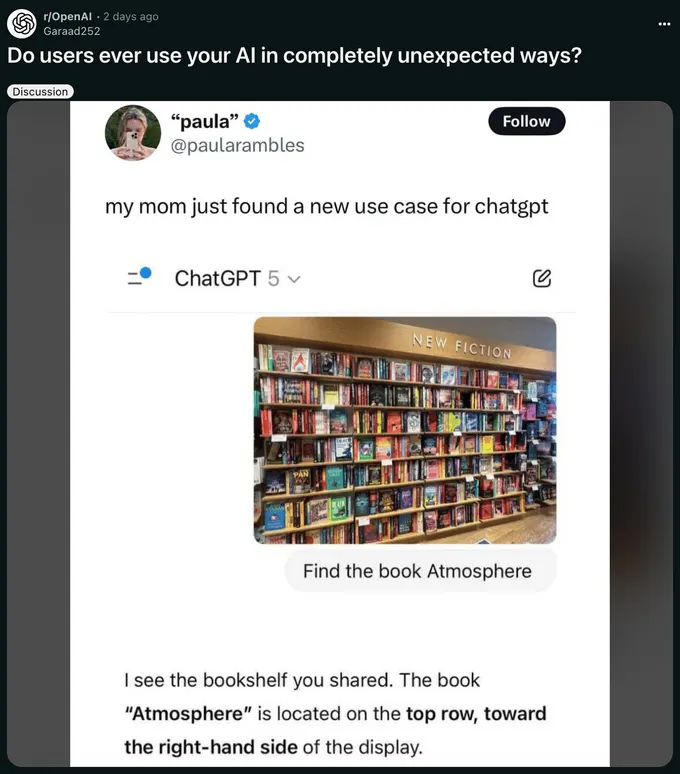
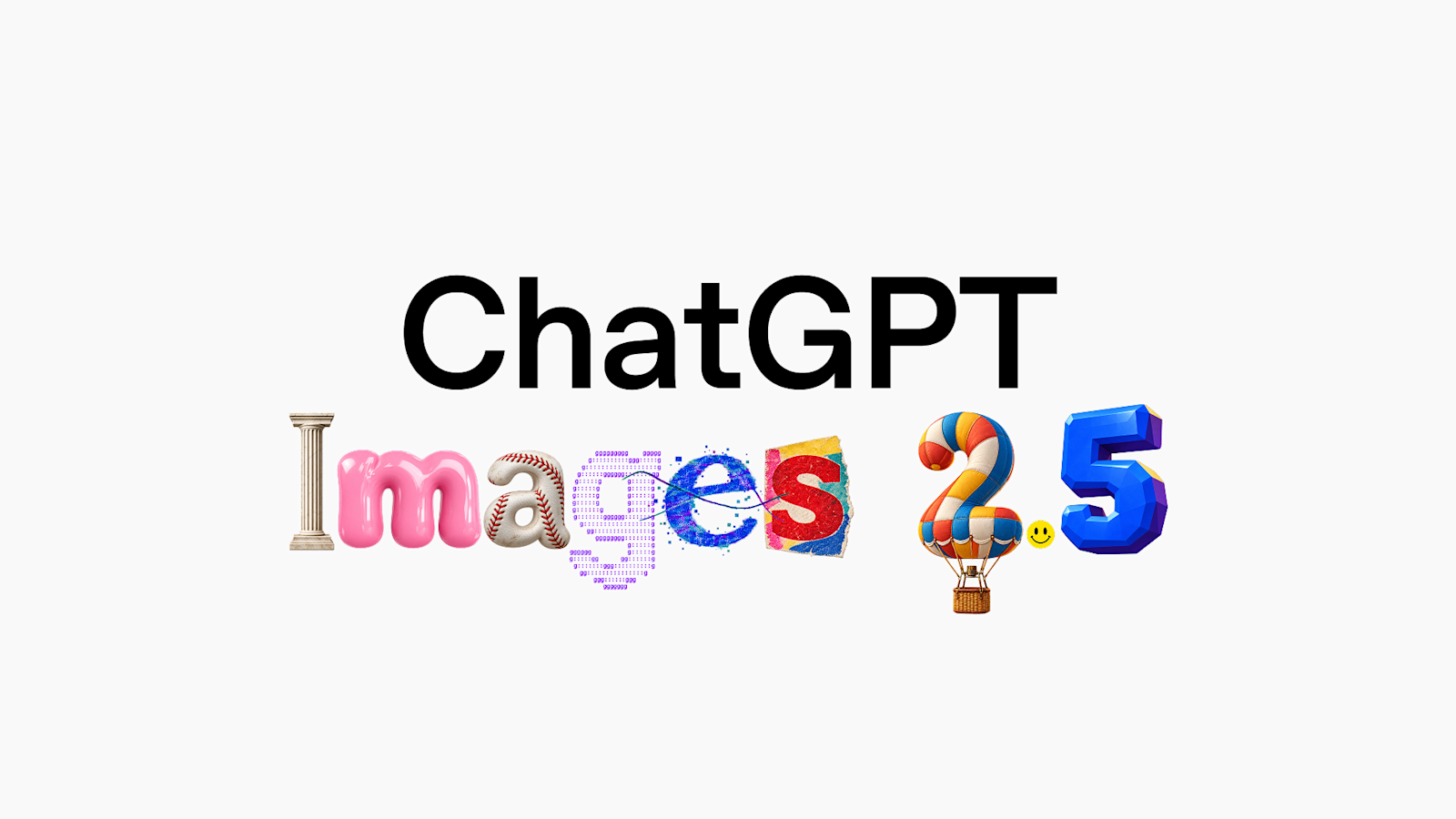
OpenAI is rolling out ChatGPT Images 2.5 around a deceptively hard promise: change one part of an image without rebuilding everything else. The company says the upgrade better preserves reference subjects, composition, style, and earlier edits through multiple rounds. That would make image generation feel less like starting over and more like working in an editable document. OpenAI also claims up to 50 percent lower latency than Images 2.0, though that is a maximum company-reported reduction, not a guarantee for every request. Users can comment directly on an image to point to a region and describe the change. A new Sketch feature lets them draw a visual reference, and templates support posters, flyers, merchandise, and product photos. Images can also be shared with their generating prompt, so others can reuse the idea with their own details. The rollout covers ChatGPT, Work, and Codex across desktop, mobile, and web, but access differs; templates were not yet available in Work mode. For developers, Flare is the faster default API option, while Sunburst is aimed at premium workflows needing tighter control across edits. OpenAI says prompt and image checks, C2PA metadata, and invisible watermarking remain in place. The real test is not the first edit. It is whether the promised preservation survives a long, complicated session. That same shift from outputs to workflows appears in Meta’s Muse, a personal agent for U.S. adults. Muse can send email, book travel, complete forms, shop, and make purchases through services the user chooses to connect. It can keep working after the app closes, then return when a decision is needed. Meta says Sentinel is the sole authority for network access and connected-service actions, with approvals required for sensitive steps. Passwords and payment details remain hidden from the model. Muse is available on the web, iOS, Android, and WhatsApp, with free, 20-dollar Power, and 100-dollar Maximum tiers. The open question is whether users will grant an agent this much access. Control is also the issue in a joint advisory from the NSA, FBI, and CISA. The agencies allege that DeepSeek, Moonshot AI, Alibaba, MiniMax, StepFun, and Z.AI used fragmented, large-scale querying to extract restricted capabilities from U.S. frontier models. They describe billions of tokens across millions of requests since at least late 2024, spread across accounts, providers, proxies, and aggregators. The advisory distinguishes legitimate knowledge distillation from targeted extraction, and recommends coordinated defenses involving model companies, cloud providers, and infrastructure firms. The allegation remains an agency assessment, but it points to a growing contest over who controls access to model capabilities. And in mathematical research, OpenAI says more than 1,000 agents produced a Lean-formalized solution to the Navier-Stokes problem after more than 50 hours and millions of dollars in compute. The claim is not independently settled. Mathematicians Tristan Buckmaster and Levent Alpöge have raised questions about priority and attribution, while OpenAI denies using their prompts or proof to guide its systems. Further examination is needed to compare the proofs. Across all four stories, the practical question is the same: as AI takes on longer workflows, watch who controls the edit, the permission, the data, and ultimately the credit.