Google adds AI image editing to Docs and Slides
ChatGPT Health gets a read-only Epic link for clinicians, and Anthropic restarts cyber testing with new controls.
By Saeed Ezzati8 min read
The audio edition
Listen to this newsletter
0:003:29
Read transcript
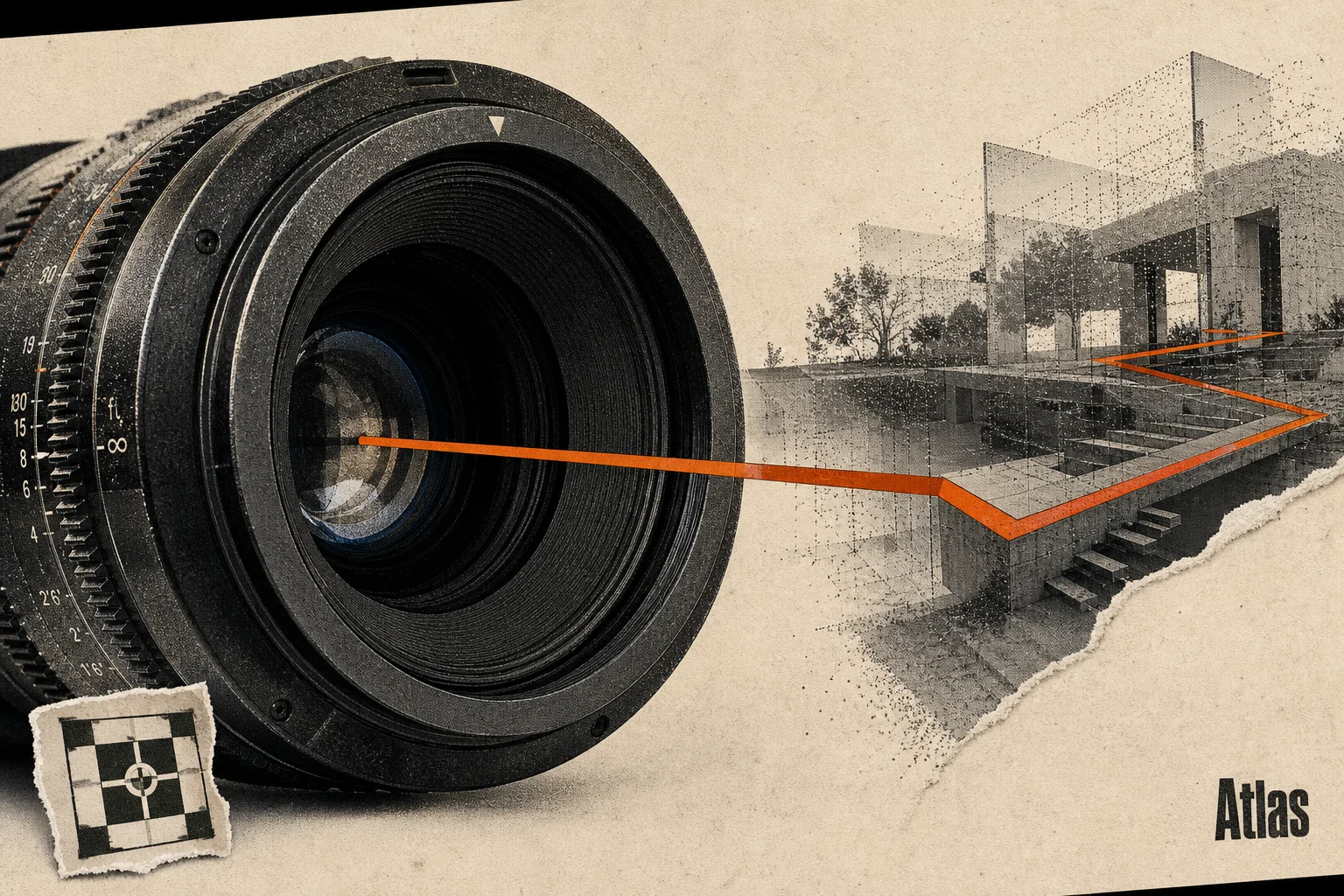
World Labs is opening Atlas to selected partners, putting controlled video and explicit 3D scene reconstruction into the same spatial model. Atlas takes one to six reference images, a manually designed camera path, and optionally text or depth maps, then can generate up to one minute of controlled fourteen-forty-P video. It can also simulate the views and depth readings a robot-mounted camera would see along a route. The key design choice is that camera geometry is an input, not merely a prompt. Atlas places images in a shared three-dimensional context, which lets users specify how the camera should move. It can fill in areas outside the supplied views, though that creates a practical boundary between reconstruction and invention. World Labs says two or three images will typically produce a faithful reconstruction, while additional images reduce the need to infer unseen details. The system can export point clouds and three-D Gaussian splats, and the company says visual-effects teams could create new angles from footage captured by as few as three cameras. For robotics, World Labs says Atlas can generate simulated RGB images and depth readings, including scenes with rigid, articulated, and deformable objects. The early results are promising but company-reported: human raters preferred Atlas in 75 to 94 percent of camera-control trials, depending on the competing model. In sparse-view reconstruction, World Labs reports a 25.3 error score versus 28.7 for the next-best compared open-source baseline. Closed commercial systems were excluded from that comparison. The real test now shifts to partner workloads. World Labs has not disclosed partner identities, pricing, a public API, or a general-availability date. More source images may make Atlas dependable for production, but partner use will show how well one spatial model handles both creative footage and messy real-world environments. That same move toward AI at the work surface is appearing in healthcare. OpenAI is connecting ChatGPT Health to EH-pik, letting clinicians bring appointment notes, lab results, medications, specialist documentation, and patient history into ChatGPT for review. The connection is read-only: ChatGPT can summarize and analyze the chart, but it cannot write back to the medical record. OpenAI is also adding a public-data plugin and Business Associate Agreement-enabled workspace tools, while maintaining that AI is not suitable for diagnosis or treatment. Google is applying the same embedded-workflow idea to visual work. Google Pics, powered by its Nano Banana model, is rolling into Docs and Slides, with Drive planned in the coming weeks. Users can isolate objects, edit or translate text inside an image while preserving its design and font, generate variants, and leave targeted comments. Teams can co-edit creations. The rollout is reaching Google AI Pro and Ultra subscribers and most Workspace business customers over the coming weeks. And for live conversations, Meta Superintelligence Labs introduced Muse Voice Transcribe, which streams text, speaker attribution, and endpoint signals—the model’s judgment that speech has ended. Meta reports a 3.1 percent final streaming word-error rate and a 17.5 percent average diarization error across three public benchmarks. It supports 25 extensively validated languages, code-switching, and more than 20 speakers, but Meta has not said how developers or consumers can access it, what it will cost, or where it will be deployed. Across all four launches, the useful question is no longer whether AI can generate an output; it is whether the surrounding controls, permissions, and workflow fit are strong enough for people to trust that output at work.